Friday, January 31, 2020

BOOK REVIEW: Bellevue: Three Centuries of Medicine and Mayhem at America's Most Storied Hospital by David Oshinsky

It might seem a 370+ page book is overkill for a history of a single New York City Hospital, but Bellevue: Three Centuries of Medicine and Mayhem at America’s Most Storied Hospital by David Oshinsky, was a nice surprise. I got the book from my library to see what it had to say about a specific moment in its history, but started reading from the beginning just because, and ended up reading the whole thing.

The book covers the history of the hospital from when it was little more than a pesthouse for yellow fever victims in the Colonial period to a modern-day facility equipped to deal with Ebola.

More than a history of New York’s most resilient public hospital and teaching facility for new physicians and nurses, Bellevue is a history of medicine in America in microcosm. Well-researched, readable, and chock full of interesting anecdotes, this book held my interest from start to finish.

Tuesday, January 28, 2020

BOOK REVIEW: The Only Story by Julian Barnes

I pulled another book from my TBR pile: The Only Story by Julian Barnes. I normally love this writer but I thought this book was a bit of a dud.

The narrator is a middle-aged man relating his story, which is a love story. Because he has heard, or believes, that the only story worth telling IS a love story and that everyone has one of their own, he sets out to tell us his. Because everything not directly related to the love story is considered extraneous, the novel is pared down to the essentials. Unfortunately, the story is not unique and brave and ultimately tragic, but rather is commonplace, dull, and sad.

The narrator, Paul, looks back on his life, which begins at age nineteen when he met the love of his life, Susan Macleod. She was forty-eight, married with two grown children, and was assigned to be his tennis partner at his parents’ club. They hang out after tennis, he starts driving her around, bumming around her house, going with her to concerts, and they start sleeping together. Her husband is there in the background, aware of what’s going on, as are her daughters and Paul’s parents. They are all extraneous to the lovers so are no more than sketched in.

Paul is a callow college student with no ambition and a mistaken awe of his own originality. His lover is so much older–how cool is that!. He doesn’t see what they are doing as wrong, since they are in love, and the husband is a jerk. Or if it is wrong, he is thrilled by his scandalous misbehavior. He believes his friends are impressed.

Paul remembers Susan as a quirky original, but the picture he paints of her is also shallow and dull. The relationship plods along. They don’t actually do much. Eventually, it becomes clear that Mr. Macleod is drunk and physically abusive. Susan and Paul move in together.

The relationship lasts years. Divorce is not really an option. Or maybe it is, but not one that Susan is interested in. She gets depressed. She starts drinking. Heavily. He can’t save her. He gives up and moves out. They both age. Neither has another real relationship.

The storyline is realistic. It’s objectively sad. However, I was never drawn in to care about the characters. There was not a lot of depth to them or to the relationship. The narrator likes to meditate on love. In fact, he keeps a notebook of pithy sayings but ends up crossing most of them out. That's kind of how I feel about this book, like it could be crossed out.

Monday, January 27, 2020

BOOK REVIEW: The Only Plane in the Sky: An Oral History of 9/11 by Garrett M. Graff

The Only Plane in the Sky: An Oral History of 9/11 by Garrett M. Graff is a riveting read. It’s a chronological account of the events of 9/11 told in bits and pieces by people who were there. Some of the voices are carried though the whole story and others appear only once or twice. The effect is to take you back to that awful day and give the event new immediacy.

The author does an amazing job pacing the story as the day progresses and the focus shifts from New York to the Pentagon to Pennsylvania and back again. We learn exactly what was going on at the Twin Towers,  in the bunkers, and on Air Force One–the confusion, disorganization, and fear, as well as remarkable dedication and bravery.

I wasn’t expecting to find this so readable or so important. No matter your perspective on where the country is now, it’s worthwhile reading and remembering what it was back then.

Saturday, January 25, 2020

BOOK REVIEW: Three Things About Elsie by Joanna Cannon

Three Things About Elsie by Joanna Cannon is a contemporary mystery set in a home for the elderly in England. The protagonist, Florence Claybourne, is eighty-four years old and has dementia. She is coping, helped along by two other residents: a retired general named Jack and her lifelong best friend, Elsie. And then a new resident enters the home, Gerald Price. Florence recognizes him as Ronnie Butler. But sixty years ago, Ronnie Butler drowned.

The story unfolds in bits and spurts as Florence struggles with memories she can’t quite recall and perhaps doesn’t truly want to recall. But Ronnie Butler is a dangerous man and, even after all these years, he’s out to get Florence. Jack and Elsie are on her side, but no one else believes her.

The Cherry Tree Home for the Elderly is staffed by kindly, well-meaning people who wanted more out of life. Each has an interesting back story, though most are only lightly touched upon.

The most intricate life story belongs to Florence. As the final pieces fall into place, it becomes clear how interconnected all those lives are even if they are unaware of the connections.

It is a well-plotted story with warm characters. The ending is poignant and the mystery solved satisfactorily. The book reminded me strongly of Elizabeth is Missing by Emma Healey, which I also enjoyed.

Tuesday, January 21, 2020

BOOK REVIEW: An Environmental History of the Civil War by Judkin Browning and Timothy Silver

I received this book for free from Netgalley. That did not influence this review.

An Environmental History of the Civil War by Judkin Browning and Timothy Silver, to be released in mid-April, is the latest contribution to American Civil War history that not only takes into account environmental factors but makes the case that these factors were central to deciding the outcome.

The various chapters discuss illness (particularly infectious diseases), weather, the availability and scarcity of adequate food, terrain, use of animals and the problems associated with their use, and soldiers’ death and disability. These are placed in context more or less chronologically, although their impacts were felt throughout the course of the war.

While many of the big-picture conclusions are not revelations, the book delves into the details supporting the conclusions in a scholarly yet accessible fashion that aids in understanding. The two authors’ combined expertise makes for a wonderful synthesis of a good deal of material. For those interested in Civil War history who are not fluent in environmental history but who would like to see events examined from this angle, this book is a fine choice.

Saturday, January 18, 2020

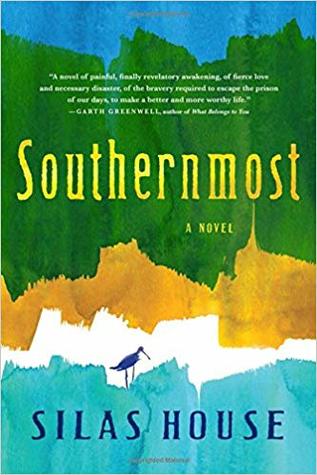
BOOK REVIEW: Southernmost by Silas House

Silas House is one of Kentucky’s foremost contemporary writers, yet I’d only read one of his novels, Eli the Good, until our book group chose Southernmost for our next meeting.

The protagonist, Asher Sharp, is a fire-and-brimstone preacher in a small Tennessee town who has lost the verve for the harsh, exclusionary, judgmental preaching that had made him so popular with his like-minded congregation. He has a wife who is steeped in this type of religion and a nine-year-old son who is a more independent thinker. Asher loves his son with his whole being, but he has fallen out of love with his narrow-minded wife.

An historic flood hits his community with devastating consequences. Among the newly homeless is a gay couple who had recently moved to the community. Asher offers to let them spend the night in his home, but his wife rebels. This is the beginning of the end of their marriage.

Asher’s backstory is that he had a gay brother who was shunned and abused by his mother. Asher adored the older brother, but sided with his mother and threw himself into spreading the message of hate and intolerance. He has not seen his brother in ten years, but receives occasional cryptic postcards from him. Asher is filled with regret for the way he dealt with his brother and for the self-righteous beliefs he once held and encouraged others to hold.

When he tries to preach a more inclusive message to his congregation, things blow up in his face. He’s voted out. His marriage falls apart. And he loses custody of his son. Unable to bear the loss and fearful of leaving his son to grow up under those influences, he kidnaps the boy and sets out for Key West, where he believes his brother is living.

Despite finding a place to live and work in isolation, Asher soon realizes that living on the lam is a terrible environment for a child.. But the only option now is to return to Tennessee where he will undoubtedly be arrested.

This novel is beautiful and sad. The nasty characters have also suffered and their viewpoints are understandable if unacceptable. Asher’s heart is in the right place but his actions are misguided. The message is important. The delivery is a bit preachy, but given the characters, that’s to be expected.

Tuesday, January 14, 2020

BOOK REVIEW: Novel with Cocaine by M. Ageyev

Novel with Cocaine by M. Ageyev (translated from the Russian by Michael Henry Heim) was a Christmas gift, so it didn’t sit long on my TBR pile.

M. Ageyev is a pseudonym. The author is suspected to be Mark Levi, a Russian emigre in Paris. The novel was first published in 1934. It was rediscovered and translated into English in 1984.

The narrator/protagonist, Vadim Maslennikov, is a disturbed, disturbing adolescent from an impoverished Russian household. His father is dead. Vadim is ashamed of his dreary mother who sacrifices everything for him. His cruelty to her is horrifying. Despite his laziness and aimlessness, Vadim believes himself to be exceptionally smart and on the path to becoming a wealthy lawyer.

The first part of the book covers his school days. The school is filled with awful people. Vadim fits right in.

After graduation, he settles into a life of bumming around, borrowing money, and looking for women to sleep with. He has an affair with a married woman who eventually dumps him for being an awful person.

Surprisingly, the novel is compelling, despite the repulsive narrator. He’s full of self-justification and impressed by his own psychological insights. The author does a superb job of creating a fictional character that I could not care less about, but in a world that drew me in.

With nothing to do and no one to do it with, Vadim is bored. When an acquaintance calls and invites him out to join a small group who are hoping to snort cocaine one evening, Vadim joins them. He is invited only because they are out of money and need whatever pittance he can provide. That is his first experience with cocaine and he is instantly hooked.

After the first night, he goes to the home of a wealthy school friend, who fortuitously is going away to visit a girlfriend. He tells Vadim he can housesit, and gives Vadim a wad of money to entertain himself. Vadim spends it all on cocaine.

It is an interesting, personalized narrative of cocaine’s effects, physical and psychological. Vadim eventually succumbs to his addiction.

It’s not a cheery story. It’s not one where I could feel any empathy for the characters. But it is powerfully written.