Monday, December 10, 2012

HISTORICAL HOLIDAY BLOG HOP- DECEMBER 10-17

Sign up for the 1st Annual Historical Holiday Blog Hop!

Welcome to the 1st Annual Historical Holiday Blog Hop, hosted by Passages to the Past. Hop over to the host site to enter to win some amazing grand prize packages. And hop around to the other participating blogs to discover what the other historical fiction fans are offering as prizes. I'm hoping to find some great books to add to my TBR list whether I win anything or not!

I'm offering a Medieval Historical Mini-Prize Package, including three novels to go to one winner.


The first is: Illuminations. A Novel of Hildegard von Bingen by Mary Sharratt.

Link to my review here.

The second is The King's Mistress by Emma Campion.

Link to my review here.

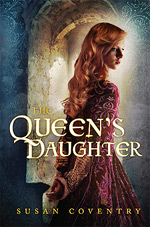
And my book is: The Queen's Daughter.


To enter (Sorry but for readers in the US only this time around): Leave a name and email address in the comment section. You don't have to be a Reading World follower, but if you are a follower (GFC or email subscriber) you'll get one extra entry. Please make a note in the comment if you are a follower so I'll know to count your extra entry.


Thursday, December 6, 2012

ESCAPE TO THE PAST WITH: The Passing Bells by Phillip Rock

Here’s something I really enjoy: good old-fashioned, multi-POV, epic historical fiction. It’s what I cut my teeth on. And even though I don’t read as much of it these days (it seems to have fallen out of fashion somewhat) when I do read one of these novels, I’m hooked.

I saw mention of The Passing Bells by Phillip Rock at Historical Tapestries, actually a guest post by The Savvy Reader, that talked about favorite WWI books. The Savvy Reader recommended the book for Downton Abbey fans. I haven’t seen the show but people have told me I would enjoy it. A book described as Downton Abbey-like sounded like the next best thing. My library had a copy so. . .

The Passing Bells is the story of the Greville family, including Anthony Greville who is the 9th earl of Stanmore, his wife the countess, his two adult sons (Charles and William) and a daughter (Alexandra), friends of the family who are slightly lesser in rank-- Captain Fenton Wood-Lacy and Roger Wood-Lacy, an heiress whom Charles is being pushed to court, Winifred Sutton, and an exceptionally wealthy and gorgeous neighbor/childhood friend, Lydia Foxe. The boys are in love with Lydia, but her father, Archie Foxe is not a gentleman. (He’s a perfectly nice man, it’s just he’s made his money in trade and has anti-aristocratic political views.) There is also an American cousin of the Greville’s– Martin Rilke, who is a journalist come to England intent on a 6 week or so European tour. His plans are disrupted. And then there are numerous servants in the Greville’s household, Abingdon Pryory (misspelling intentional). The most significant of the servants are the chaffeur/mechanic, Jamie Ross, and an upstairs maid, Ivy Thraxton.

The novel introduces us to all these people, letting us know their backgrounds and their desires and what is keeping them from obtaining their desires. The rigid class system appears to be the driving force in each of their lives, whether they are reluctantly accepting of their positions or trying to clamber above their station (or marry below it.) The characters and their dilemmas are well-developed and were interesting enough to keep me reading, but the pace was pretty slow starting out. I had to keep reading because it’s the kind of book that if I put it down for too long, I might not have picked it back up--not at first. And yet, I didn't exactly want to put it down either. I was quietly sucked in.

This book has been around awhile. It’s copyright is 1978. It’s a WWI novel, but here’s the thing. It’s 433 pages long, and it wasn’t until page 108 that a passing reference to the assassination of the Archduke of Austria appeared. The war did not begin until page 150. Before the men rushed off to battle, the author makes certain you are emotionally invested in the characters. And not just in the characters, but in what is happening to the home front. You understand the way of life, warts and all. The amount of time spent on character development is well worth it.

Before the war, men are discussing the Serbia situation with little understanding and less interest. Once the war begins, they fight dutifully and patriotically, but there is little sense, from the novel at least, that winning will accomplish anything but the end of horrific, meaningless slaughter. In the meantime, the way of life that they knew was unraveling behind them.

With the beginning of the war, the pace of the narrative picks up. By then, I was fully committed to the characters and I was quite deeply immersed in the war-time plots. With so many characters to follow, it did have a bit of a soap opera quality, moving from one storyline to another. Yet their lives were intricately intertwined so the overall story flowed well. As the war draws to its close, the book also drew to its devastating end. I didn’t realize just how addicted I was until I found myself requesting Book Two in the Greville saga, Circles of Time from the library. I want to know how they (the ones left) move on after the war.

Friday, November 30, 2012

BOOK BLOGGER HOP- NOV. 30- DEC. 6

Book Blogger Hop

Welcome to the Book Blogger Hop!

Hashtag: #BookBloggerHop


Book Blogger Hop is the creation of Jen from Crazy for Books. Since October, the weekly hop has been hosted by a variety of book bloggers all across the globe and for the next two weeks, the hop is visiting Anglers Rest!


So, without further ado....

Question - Apart from being readers, many of us collect books on a specific subject or by a particular author. What books or which author do you collect?


It's been quite some time since I've participated in the book blogger hop. Somehow, Friday always seems to slip away from me and then I'm thinking about other things. But I keep meaning to get back to hopping. So, my answer:
 
There are a couple of authors whose books I collect, mainly favorite historical fiction writers. Oddly enough, the books I collect most avidly are historical mysteries- even though I don't very often read mysteries. But I am addicted to Margaret Frazer. In particular, I love the Joliffe series, but I read the Dame Frevisse books too (partly because I'm hoping Joliffe will show up.)  I also have been following Lindsey Davis's Falco series for years and years.

I collect other books too. Medieval history is one topic. I'll stop there. My collections get pretty random after that.

If you want to join in the hop, visit Anglers Rest to link up your own post.  Link back YOUR Friday Book Blogger post and then try to visit at least 3 other sites and comment - hops are a great opportunity to meet new bloggers!

Thursday, November 29, 2012

ESCAPE TO THE PAST WITH: Illuminations. A Novel of Hildegard von Bingen by Mary Sharratt

When I saw that a novel of the life of Hildegard von Bingen was being released, I knew I would have to read it. She is one of those famous, strong medieval women whose name always pops up in medieval history texts. Hildegard was an abbess, a woman known throughout the Christian world for her visions and her writings. She had such stature in her day, she even got away with occasionally defying the men of the Church.

Even so, I approached Illuminations. A Novel of Hildegard von Bingen by Mary Sharratt somewhat warily. Hildegard started off as an anchorite–actually, as a companion/servant to a young noblewoman, Jutta, who was an anchorite. So, not only was Hildegard a nun, dedicated to the church from childhood, but she was walled up, secluded, in a small room alongside an abbey. She was supposed to live out her days with her magistra, allowed no other human contact except a few whispered words through a hole in the wall that served as a portal for the delivery of their meager rations of food. She lived like this for thirty years.

That Hildegard could survive this and maintain her sanity is impressive and inspiring, but could it be an interesting novel?

In fact, in Mary Sharratt’s skillful hands, it is fascinating.

Hildegard eventually emerges after Jutta’s death. Inspired by her own visions and reinforced by the strength of her personality, supported by a few well-placed friends, she goes on to leave the anchorage and start a house for Benedictine nuns. There are obstacles in her path that she must overcome, some external and some internal.

I don’t want to give away too much of the plot/life story, although the outline of Hildegard’s life is easily available if that’s all you want--google her. The pleasure of reading Illuminations is that is historical fiction. Sharratt reinvents the lives of these medieval people, giving them back an emotional life. She manages to make the life story of a medieval nun very interesting indeed.

Wednesday, November 28, 2012

2013 CHALLENGE #1- The Historical Fiction Challenge and Giveaway Hop

UPDATE:  A list of the books I've read for the challenge and links to my reviews can be found at the bottom of the page.


It's that time of year again- time to start choosing challenges for next year. Historical Tapestries is once again hosting the historical fiction challenge. The details are:

The challenge will run in the same way as it has over the last couple of years that H.T. has hosted the challenge. The only thing that has changed is the names of the categories.

Each month, a new post dedicated to the HF Challenge will be created. To participate, you only have to follow the rules:

  • everyone can participate, even those who don't have a blog (you can add your book title and thoughts in the comment section at H.T. if you wish)
  • add the link(s) of your review(s) including your name and book title to the Mister Linky they’ll be adding to their monthly post (please, do not add your blog link, but the correct address that will guide readers directly to your review)
  • any kind of historical fiction is accepted (HF fantasy, HF young adult,...)
During these following 12 months you can choose one of the different reading levels:

20th century reader - 2 books
Victorian reader - 5 books
Renaissance Reader - 10 books
Medieval - 15 books
Ancient History -25+ books


In most challenges, I shoot for the lowest level because I don't want it to become a chore, but I tend to aim high on the historical fiction challenge since I'm reading this genre anyway. Last year I aimed for 15 books. I finished the challenge early and kept on going (although I didn't keep counting.) I'm not sure if I made it over 25, but that doesn't sound like an unreasonable number to use as a goal. So I'm going for Ancient History!

Head on over to Historical Tapestry and join us for the challenge!

The books I've read (with links to reviews) are:

1. The Forever Queen by Helen Hollick
2. Trapeze by Simon Mawer
3. The Painted Girls by Cathy Marie Buchanan
4. The Sign of the Weeping Virgin by Alana White
5. Gillespie and I by Jane Harris
6. Wolf Hall by Hilary Mantel
7. Shadow on the Crown by Patricia Bracewell
8. Z. A Novel of Zelda Fitzgerald by Therese Anne Fowler
9. The Winter Palace by Eva Stachniak
10. Out of the Easy by Ruta Sepetys
11. The Light Between Oceans by M.L. Stedman
12. The Eagle of the Ninth by Rosemary Sutcliff
13. A Little Folly by Jude Morgan
14. The Berlin Boxing Club by Robert Sharenow
15. Call Me Zelda by Erika Robuck
16. The Typewriter Girl by Alison Atlee
17. House of Earth by Woodie Guthrie
18. Tulip Fever by Deborah Moggach
19. The Daughter of Time by Josephine Tey
20. The Golden Dice by Elisabeth Storrs
21. The Ides of April by Lindsey Davis
22. Passion by Jude Morgan
23. Bitter Greens by Kate Forsyth
24. The Lady and the Poet by Maeve Haran
25. Rules of Civility by Amor Towles
26. The Anatomist's Wife by Anna Lee Huber
27. Letters from Skye by Jessica Brockmole
28. Rose Under Fire by Elizabeth Wein
29. Mortal Arts by Anna Lee Huber
30. Mrs. Lincoln's Dressmaker by Jennifer Chiaverini
31. Venetia by Georgette Heyer
32. The Man Who Shot Liberty Valance by Dorothy M. Johnson
33. Burial Rites by Hannah Kent
34. A Hundred Summers by Beatriz Williams
35. The Tenderness of Wolves by Stef Penney
36. Longbourn by Jo Baker

Saturday, November 24, 2012

CLASSICS CHALLENGE: The Strange Case of Dr. Jekyll and Mr. Hyde by Robert Louis Stevenson

I finished the 2012 Back-to-the-Classics Challenge! Although this selection, the classic horror novel, would probably have been better suited to Halloween than to Thanksgiving, the important thing is, I had one category to go and I got it done.


The Strange Case of Dr. Jekyll and Mr. Hyde by Robert Louis Stevenson is another one of those classics that is so deeply embedded in our collective consciousness that we all sort of know the story without really knowing it. Even kids know Jekyll and Hyde–it was an Arthur episode!  But how well do we know it?

There are spoilers here, so be forewarned. The worst spoiler is the big reveal that comes at the end of the book, but that’s the part that everyone already knows. Jekyll and Hyde are one and the same person: good and evil sides of the same man. While this came as no surprise to me, I can’t imagine what it must have been like to be one of the first exposed to the story. The novel must have been full of suspense for those earliest unsuspecting readers. It’s a different sort of experience now. What surprised me was not the outcome, but the structure of the book.

The story is told from the point of view of a friend of Dr. Jekyll’s, the lawyer, Mr. Utterson. We hardly even see Dr. Jekyll or Mr. Hyde. We hear about them from a distance. The dilemma unfolds slowly, but it is gripping nevertheless.

Utterson and a kinsman, Mr. Enfield, were on a stroll one day when they came upon a door. The door was–as Utterson knew–the back entrance to Dr. Jekyll’s home, his laboratory. Mr. Enfield was unaware of this and related a story about the door. He had seen a horrible man go in that door, one Mr. Hyde. Mr. Hyde had run down a child in the street, incurring the wrath of many witnesses, and had retreated to that door to retrieve a check to pay off the child’s parents. The check was endorsed by. . .Dr. Jekyll.

Dr. Jekyll was a well-known and much beloved man of science in the town. No one knew why he would befriend such a fiend as this Mr. Hyde. Utterson could shed no light on the mystery, but he had more reason to be concerned. Dr. Jekyll was one of his clients and he was aware of the man’s will which left everything to the nasty Mr. Hyde.

Time passed. My Hyde’s reputation for ill-doings increased. Jekyll seemed to be avoiding his old friends. Utterson worried about him more and more. And then, one night, Hyde commits a murder and disappears.

The town considers itself well rid of him. For awhile, it seems as though Jekyll is more his old self again. But this period does not last. Jekyll retreats from society and Utterson suspects Hyde has returned. When he is forced at last to confront Hyde, fearing for Jekyll’s safety, he finds Hyde dead. A letter is left for him explaining all.

The "Jekyll and Hyde" story that I thought I had known is really all contained in this short summary letter. It explains about the sinister potion Jekyll mixed up in his laboratory to allow him to separate his evil self from his good self. It explains how Hyde began to gain control and eventually took over. It’s oddly anticlimactic since the revelation comes too late and since that’s the part of the story that is so well known. And yet, I can appreciate the sensation it might have made when the tale was new.

There is also, of course, reason to read the book for its strength as a literary novel. If you care to pick apart the dual nature of man, good versus evil, Victorian mores, etc, its all in there. Stevenson is none too subtle with his symbolism.

I think I had been expecting something a bit more horrifying. I think I expected to suffer more with Jekyll as he spiraled out of control. But if the original intent was to keep the reader in the dark as to the identity of Mr. Hyde, I can see why this was Utterson’s story. It is, overall, a quick, enjoyable read and a classic I can heartily recommend.


This (like many of my want-to-read classics) has also been on my shelf for awhile so it also goes toward my Mount TBR challenge. We’re getting awfully close to the end of the year. I’ve got a few books to go toward that challenge, but my others are done!

Wednesday, November 21, 2012

BOOK REVIEW: Open Wound. The Tragic Obsession of Dr. William Beaumont by Jason Karlawish

I recall that way back in medical school little tidbits of history of medicine were sometimes dropped into our lectures to make things interesting. When we were learning about digestion, an anecdote was related to us about an army surgeon who studied the stomach thanks to a fortuitous abdominal wound in one of his patients. The wound never fully healed, leaving a gastric fistula–an opening from the skin directly into the stomach. The surgeon could put food in on a string and pull it out after a time, allowing him to visualize the digestive process.

It’s a story that is at once repellent and fascinating. Moreover, there’s something ethically uncomfortable about the surgeon experimenting on his patient. But it’s one of the many medical curiosities that get thrown at you in medical school as you are busily trying to memorize too many facts. That little piece of information gets filed away and forgotten.

And yet, precisely because of that ethical discomfort, this piece of medical history deserves more attention. Dr. Jason Karlawish, a professor of medicine and bioethics, has written a fictionalized account of the interwoven lives of the army surgeon, Dr. William Beaumont, and the patient, Alexis St. Martin. In Open Wound, The Tragic Obsession of Dr. William Beaumont, Karlawish delves into the psychology of the surgeon, exploring his reasons for pursuing the experiments and his fascination with his patient. It also lays bare the clear ethical transgressions, a problem evident to everyone except the tragically obsessed doctor.

Alexis St. Martin was a young indentured servant employed by the American Fur Company in 1822 when he was accidentally shot in the abdomen at the company’s store. At first, the company employees send for the local doctor, U.S. Army Assistant Surgeon William Beaumont. But as it quickly becomes clear that his injuries must be lethal, the head of the company suggests/insists that Alexis be made comfortable in the storeroom and there be allowed to die. No one wants to be responsible for paying for his treatment if he is going to die shortly anyway. Beaumont can’t do it. He is unable to abandon a patient without attempting to provide better care. Therefore, he carts him off to the army hospital, against orders. Beaumont is firmly on the right side of this moral dilemma.

The course is difficult and prolonged, but eventually Alexis recovers...almost. The fistula remains–a window into his stomach. Beaumont realizes that this is a perfect opportunity for studying the physiology of gastric digestion. And here is where things go awry.

William Beaumont is an ambitious man. Throughout the course of the book, the roots of his own insecurities are explained. He needs to rise above his humble beginnings. He wants to support his wife (and eventually his children) in finer style than is possible as an assistant army surgeon. He wants to be recognized for his accomplishments. Alexis’s stomach is the means to Beaumont’s end. Alexis’s suffering, physical and psychological, are immaterial. After all, Beaumont saved his life and was prepared to support him as a charity case. Alexis owes him.

The novel traces the remainder of Beaumont’s career, with and without Alexis, and relates the culmination of the experiments as well as the aftermath. We are nearly always following Beaumont’s point of view, only rarely Alexis’s. And while Beaumont tries very hard to make his own case, it’s all too easy to look back from a modern vantage point and see his error. He manipulates and belittles Alexis, rationalizing the need to do so because of the importance of the scientific contribution. It may be easy to judge Beaumont and dismiss this as an error of early 19th century medicine, except that we have to remember how often in the past, and sometimes the not-so-distant past, patients were exploited in the name of scientific and medical advancement.

For anyone interested in the history of medicine or anyone who loved The Immortal Life of Henrietta Lacks and didn’t get quite enough immersion into medical ethics, you might want to give Open Wound a try. It’s a thought-provoking read.