Showing posts with label WWII. Show all posts

Sunday, May 24, 2026

BOOK REVIEW: Fables and Lies by Elisabeth Storrs

I received this book for free from Netgalley. That did not influence this review.

Another WWII novel? This time, my excuse is that Fables and Lies was written by an author whose work I enjoy, Elisabeth Storrs. (Here are reviews of The Wedding Shroud, The Golden Dice, and Call to Juno, set in Ancient Rome and Etruria.)

This time, Storrs places her characters in Berlin during WWII. The story, based on real life events, focuses on Freya Bremer, an Aryan beauty brought up under a broken education system that emphasized Germany’s preeminent place in Western civilization. Her indoctrination into National Socialist ideology is nearly complete. Freya is intelligent, but naive. She has a secretarial job in a Berlin archeological museum, the one holding Heinrich Schleimann’s treasures from Troy, and dreams of one day taking part in excavations herself. But with the coming of the war, her job, along with others at the museum, becomes one of protecting Germany’s treasures (many of which were looted from other countries.) Throughout the war, with (or despite) the massive bombing campaign against Berlin, she strives to help save these ancient relics.

This is not a WWII tale of heroic resistance fighters, daring spies, or of Germans of conscience hiding Jews in their basements. It’s a story of sadistic, seemingly deranged Nazis, drunk with power, and of everyday citizens accommodating the evil in their midst in order to live their lives. The risks and fear are very real. Storrs does a fine job of showing how trapped many felt, and, realistically, how increasingly difficult it was to fight against the Nazi regime.

Freya is married to an abusive SS officer, Kaspar, who gives her and her family some protection, even some privilege. But she is in love with another man, Darien Lessing. Darien is an archeologist whom she met at the museum. Darien disabuses her of her naive assumptions of Aryan supremacy and opens her eyes to the abuses of the Nazis. And yet, he too is trapped by the system.

It is a painful book to read. Parallels with current day authoritarianism and Nazism show the slippery slope between looking the other way and complicity. It shows the level of denial when atrocities are taking place, even as the evidence becomes impossible to ignore.

The details of life in Berlin during the bombings and of how precious artifacts were given priority make this novel unique. Storrs’ meticulous research and powerful storytelling make it worthwhile.

Monday, May 11, 2026

BOOK REVIEW: The Lilac People by Milo Todd

I keep thinking no more WWII historical fiction because I’ve read so much of it. But then another comes along that I want to read. What is especially compelling is a word-of-mouth recommendation from a friend. So I added The Lilac People by Milo Todd to my TBR-pile.

This is a powerful and important novel that, in the current climate, hits very hard. In the immediate pre-WWII era, Berlin was a safe space for the LGBTQ+ community. They had a vibrant nightlife. But even more critically, there was an Institute of Sexual Science, led by Dr. Magnus Hirschfeld, where all facets of human sexuality were studied. (Unfortunately, this also led to the creation of a registry of “third sex” members of the community, which was a bonanza for the Nazis when they set out to exterminate these vulnerable people.)

The book uses the language of the times, when transgender people were called transvestites, which is not an acceptable term today. The protagonist of the novel, Bertie, is a trangender man, who works at the Institute as a clerk and sometimes tour guide. The book goes back and forth between 1945, the immediate aftermath of the war, and 1932-33, when queer people were targeted, killed in the streets, or rounded up to be sent to concentration camps. Bertie witnesses the violence, but is able to escape with his girlfriend to a farm out in the countryside when the parents of a friend take them in. The friend, Gert, was supposed to meet them there, but didn’t, and part of the heart of the book is the question of what happened to him. Was he killed? Sent to a concentration camp? Or might he have escaped to America?

The tension in the chapters sent in the early 30s is intense. Readers know what is coming under Hitler, while those living through it are blinded by a belief that things can’t get that bad, until they do. Then it’s too late.

But even more horrifying is the aftermath. I didn’t know that when the camps were liberated by the Allies, the prisoners were freed EXCEPT for those wearing pink or black triangles. LGBTQ+ prisoners were pulled aside and sent on to other prisons – by the Allies – for being “convicted criminals.”

Bertie learns this when he finds a half-dead Dachau escapee collapsed in his garden. Karl, a trans man, had been imprisoned at Dachau and managed to run when he saw fellow queer prisoners being segregated out for further incarceration. Bertie knows now they are still not safe.

At the same time, the Allies are determined to punish the German population for their crimes. By virtue of the fact that Bertie and his girlfriend, Sophia, had not been imprisoned, they are now under suspicion as being Nazis. The American soldiers are rounding up German civilians to transport them to work camps. Bertie is between a rock and a hard place.

The novel is heart-rending. At times, it does get a bit preachy and teachy, when one or another character monologues to get the message across. But it’s an important message, well worth spelling out. This novel is highly recommended.

Monday, February 23, 2026

BOOK REVIEW: The Librarian Spy by Madeline Martin

My history/historical fiction book club’s next pick is The Librarian Spy by Madeline Martin. In this WWII-based historical novel, two women use their literary-adjacent talents to help the war effort.

Ava is a librarian at the Library of Congress, who is tapped by the military to go to Lisbon, a neutral country, to gather intelligence. Her job is to collect as many newspapers and other documents that slip into Lisbon from war-torn countries as she can. Then she helps photograph them for transfer to microfilm so that they can be shipped to the U.S. and evaluated. Determined to do her part because her brother is a fighter pilot and she wants the war to end before he is injured, she doesn’t feel what she is doing is dangerous. And yet, it seems a German fellow, Lukas, a likely spy, is trailing her. And a British fellow, James, is paying her a great deal of unexpected attention as well.

Elaine is a French patriot living in occupied France, whose protective husband has been doing his best to keep her from sticking her neck out. When he goes missing, she joins the resistance. At first, her role is to help distribute an underground newspaper. And then, when it becomes known that she is familiar with running a mimeograph machine, she begins working for the press itself.

Their work intersects when Elaine decides to help a young Jewish mother and child escape occupied France and Ava discovers Elaine’s secret message encoded in the Nazi-banned newspaper.

The contributions of women in WWII is an entire subgenre unto itself, and this is a fine addition, exploring lesser known modes of aiding the war effort.

Wednesday, January 7, 2026

BOOK REVIEW: Sixty Seconds by Steven Mayfield

In Sixty Seconds by Steven Mayfield, it is one minute till midnight, Central European Time, one minute till 6:00 PM EST, on the eve of V-E day. In sixty seconds, the war with Hitler’s Germany will be over. But the quiet anticipatory lull one might expect is not there. Instead, that last minute is jam-packed with activity and danger.

Mayfield follows the stories of nine people who are experiencing that final minute, waiting for what will come next. He creates a gripping atmosphere of anticipation for the reader.

Farley is a war correspondent, a famous broadcaster, who is narrating the celebration about to erupt in Times Square. 

Selma is an elderly, mentally unstable widow, whose home is inundated with too many cats to count. She has enlisted Riley, a young man who flunked out of basic training, to carry out an assassination when the clock strikes 6:00 in New York.


Jenny is a 15-year-old girl with a remarkable voice and equally remarkable presence. She has been chosen to sing the national anthem to be broadcast worldwide as the clock ticks down. As she sings, she has to keep her mind from drifting to concern for her older brother, a gunner in the Air Force, who is still overseas and still in danger until the cease-fire takes effect.

Jimmy is Jenny’s brother. Although warned by his commander not to wander off the air field after dark, Jimmy continues a nightly walk to stretch his legs and clear his head. 

Stangl is a Nazi through and through. The one-time commander of a death camp, he is now imprisoned after capture by the Americans. He knows he is destined for execution. He is being interrogated by his captors, one of whom, the translator, had been a prisoner in the camp and had been forced to watch while Stengl repeatedly, brutally, raped his wife.

Antoni is the translator. Gosia is his wife. Gosia is now in New York, waiting for him to be able to join her. She is pregnant and her difficult  labor has begun.

And, finally, Zimmer is a German soldier, a reluctant Nazi, who hopes to survive long enough for the cease-fire to take hold. He’s counting on surrendering to the Americans to avoid capture by the Russians. But the closer he gets to safety, the less safe he becomes.

This tightly plotted novel follows the characters in ten second intervals, bringing them all closer and closer to the war’s end, revealing the interconnections between them. With sixty seconds still to go, the war isn’t over yet, and no one will be safe until it is. Deeply drawn characters, high-stakes tension, and a unique structure make this is an enjoyable WWII read.

Sunday, September 14, 2025

BOOK REVIEW: Crooked Cross by Sally Carson

There is a bookstore in the UK that I’m determined to go to one of these days. Persephone Books specializes in reprints of neglected/forgotten female writers. I’ve discovered a few great novels from the bookstore’s instagram posts, but one in particular caught my eye recently. Crooked Cross by Sally Carson, originally published in 1934, is set in the early days of Hitler’s rise to power. At first, the re-released edition was not available in the U.S., then I could only find the audiobook. Now, finally, there is a kindle version, that I quickly downloaded. Right about the same time, it was featured in a NY Times book review. (Here’s the link but there may be a paywall.)


The novel begins on Christmas Eve, 1932, with a celebration in the home of the Krugers, an “ordinary” German family. Both parents are alive and loving. And there are three adult children, two boys, Hemly and Erich, and one girl, Lexa. The boys have been largely unemployed for years due to the post-WWI economic depression in Germany. Both are restless, looking for something to do. Lexa is the main protagonist, a woman who loves her family, loves her community, and serves as something of a focal point in both. She’s young and naive, but strong and knows her own mind. She is also in love with Moritz Weissmann, a talented physician at the local hospital, to whom she is engaged to be married. Moritz is a Catholic, as was his mother. But his father is Jewish. Moritz is beloved by pretty much everyone and is good friends with Hemly.

The slow spread of fascism and Hitler-worship insidiously envelops them all. Her brothers embrace the Nazi party because they finally have jobs. Hemly, who is not a strong or particularly intelligent man, also loves it for the feeling of belonging and purpose that it gives him. Erich, handsome, athletic, charming, and with a cruel streak a mile wide, loves it because of the power he can siphon off from it and the license it gives him to enjoy his sadistic tendencies. Lexa tries to ignore what is happening, but she lives in a constant state of unease. Of disconnection. The book does a wonderful job of showing how the whole town is on edge, waiting for the other shoe to drop. Tempers flare. People get crotchety and mean. Old friendships fracture. Scapegoating grows rampant. And Moritz is first quietly shunned, and then openly persecuted for being Jewish. 

The one sure, unalterable fact is that Lexa and Moritz remain true to one another.

The novel is written in an old-fashioned style. It isn’t at all subtle. It’s not a heroic, hiding-Jews-in-the-attic story of WWII Germany. The main characters are mostly Nazis. Not reluctant Nazis, but men and women who whole-heartedly embrace what Hitler is selling. Written essentially contemporaneously with the events of the novel (fictional, but not so fictional), the end of the story was not known by the writer. And it is particularly chilling because we readers, while recognizing parallels, know how this story will ultimately end, but not how ours will.

Wednesday, June 11, 2025

BOOK REVIEW: Winter's End by Barbara Pronin

I received this book for free from Netgalley. That did not influence this review.

We think of D-Day as the beginning of the end of WWII. But it wasn’t the end. Yet. Barbara Pronin’s new historical novel, Winter’s End, takes readers into the lives of Resistance fighters in the Netherlands in the waning days of the war. Nazis are ramping up their cruelty and destruction in a desperate attempt to stave off defeat. Over the devastating winter of 1944-45, peace was still too far off.

The novel follows three women in Haarlem, where the Nazi presence was strong. Evi, a sixteen-year-old patriot, wanting to do more for her country, accepts the assignment of luring lecherous, drunken German officers into the forest to be killed. Zoe, a young veterinarian, repeatedly finds ways to hide (and feed) several Jewish families, Jewish physicians, and a German enemy of the Reich. Mila, the beautiful daughter of a collaborator, uses her position in the father’s home to learn information from high-ranking German officers to pass on to critical members of the Resistance, and, when necessary, perform dangerous missions herself. Along the way, all three women find love in unexpected places.

This is a gripping, inspiring novel of bravery and endurance in the face of fascism.

Friday, November 17, 2023

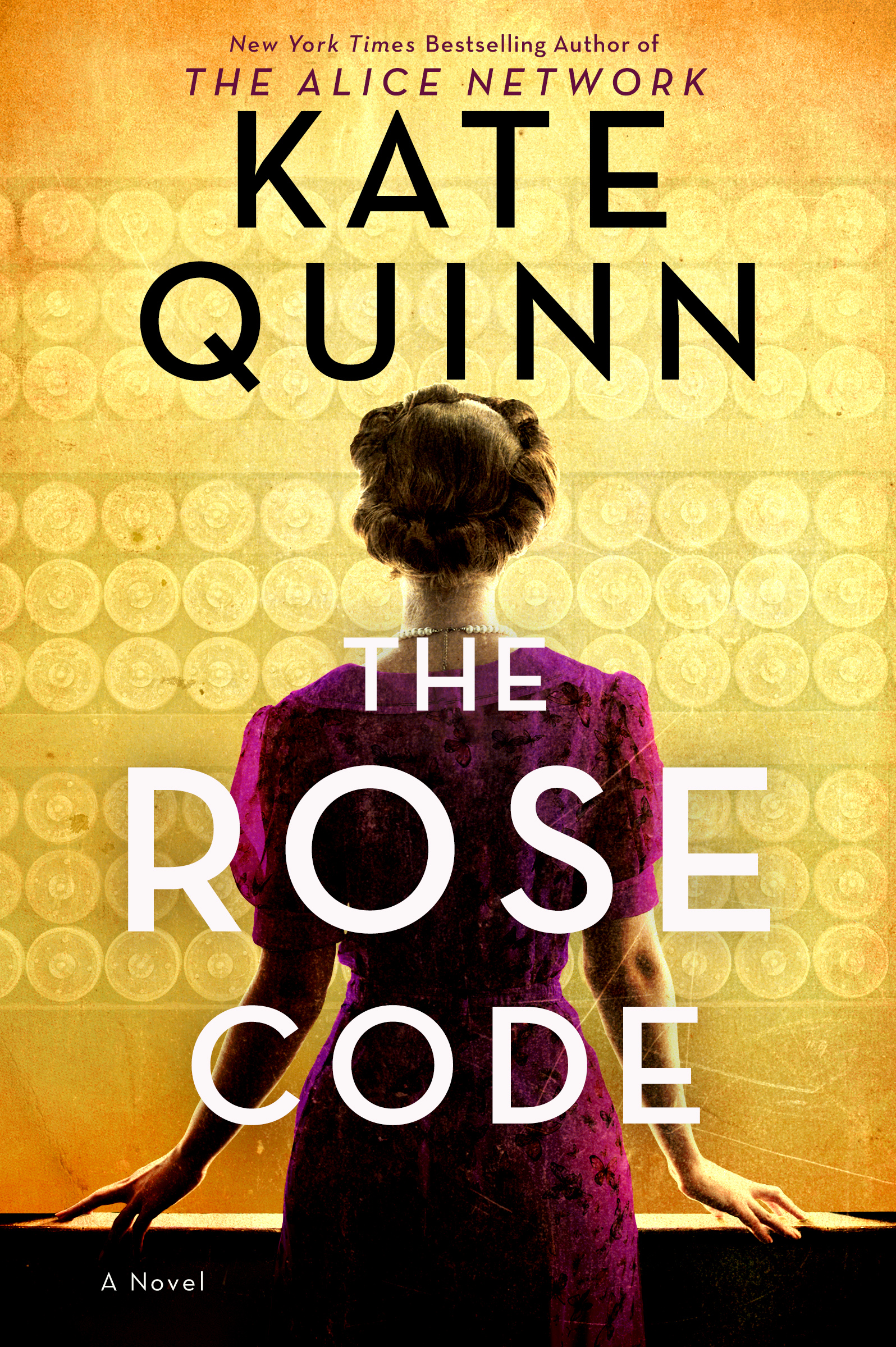
BOOK REVIEW: The Rose Code by Kate Quinn

My book group’s next pick is The Rose Code by Kate Quinn. Admittedly, my first reaction was yikes! This is a long one. But it’s a quick read. The last third, especially, is a page-turner.

The story is set in two time periods, during and just after WWII. In the “just after,” in 1947, as preparations are underway for the wedding of Princess Elizabeth and Prince Philip, three women who once worked for the war effort must reunite to catch a traitor. In the “during the war” sections, we see what they did.


Osla Kendall, socialite and one-time girlfriend of Prince Philip, is determined to be seen as more than just a dizzy deb. Mab Churt is a tall, ferociously pretty woman who climbed out of Shoreditch poverty by dint of hard work and determination. Both find themselves assigned to the top secret Bletchley Park where the German codes are being broken. They are housed with a local family, the Finches, where they meet the daughter, Beth Finch, a timid and abused young woman with a remarkable but hidden brilliance, who desperately needs a chance to break free.

At Bletchley Park, the work is so secret that even the workers are kept in the dark about what goes on in any of the divisions but their own. They are made to swear an oath that they will not speak of anything they are doing or they’ll be prosecuted as traitors. This secrecy wears them down more than the impossibly hard work. Eventually, it is the secrecy that will lead to the ruin of the friendship of these three women.

The novel has a slow build as the reader is drawn into the world of codebreaking, wartime romance, and intense friendships forged by hardship. But it’s necessary to put all the pieces firmly in place before breaking them down bit by bit. Someone at Blenchley Park was a traitor. And the women who broke each other’s trust must decide if they can trust each other enough to catch the spy before it’s too late.

Did you see the movie The Imitation Game? If you liked that, you’ll love The Rose Code.

Wednesday, November 15, 2023

AUDIOBOOK REVIEW: Mrs. Porter Calling by A.J. Pearce

I’ve been slow getting to book three in the The Emmy Lake Chronicles, Mrs. Porter Calling, by A.J. Pearce. (Book One - Dear Mrs. Bird and Book Two - Yours Cheerfully are both delightful, and I recommend reading the series in order.) I’m experimenting more with audiobooks, so I listened to Mrs. Porter Calling, read by Anna Popplewell, and it is just wonderful.

Emmy has settled into her role as the advice column editor at the now thriving women’s magazine, Women’s Friend. She works with people she loves and respects, particularly her brother-in-law, Guy Collins. (Emmy’s husband is a soldier, away at war throughout the book.) She lives with her best friend Bunty in Bunty’s grandmother’s large house. When her second-best friend, Thelma, needs a place to live with her three children, they are invited to take the top floor. Everything is chugging along as well as can be during wartime. Even the Blitz has slowed to a trickle of bombs and the news reassures them all that Hitler is on the run.


Then things fall apart. The owner of Women’s Friend has passed and left the magazine to his niece, the Honorable Cressida Porter. Mrs. Porter is a selfish, self-centered socialite who views the magazine as a way to show off. Instead of articles that serve women in wartime, she takes up the pages with photos of her dog and her society friends, as well as fashion that no one but her high society friends could ever afford. She cuts Emmy’s column down, claiming it is too dreary, and refuses to let her answer the hard questions that readers are desperate to hear about. Predictably, the magazine loses readers and advertisers. And the plucky staff, Emmy’s friends, begin to lose hope.

Just when I’m anticipating a cheery, if somewhat pat, resolution, the floor drops out from under Emmy, reminding me that there is a war on, and there are no pat answers.

Once again, A.J. Pearce delivers a heartwarming story of Brits on the homefront during WWII, doing their best to muddle through in the worst of circumstances. This is a wonderful series. I don’t know if there will be a book four, but if there is, I’ll read it!

Thursday, August 24, 2023

BOOK REVIEW: The English Patient by Michael Ondaatje

Back in the day, I had the same reaction as Elaine Benes (from Seinfeld) to the movie The English Patient. Although it isn’t a popular opinion, I was bored throughout. As a consequence, I never read the book by Michael Ondaatje, even though I know novels are almost always better than the movies based upon them.

Well, I finally picked up the book. Bits of it are familiar from the movie, but the book contains so much more.


Revolving around the lives of four characters whose paths cross in a bombed-out Italian villa as World War II is ending, it shows various ways that people are injured by war. The title character, identified through most of the book as simply the English patient, is an unknown. He may not actually be English. Burned beyond recognition, he doesn’t even know himself. However, he retains memories of a tragic love affair and those memories trickle out over the course of the novel.

His caregiver, Hana, is a young nurse struggling with numerous losses. She refused to leave her patient as her colleagues retreated further north. These two are joined by a thief who had been employed by the army as a spy. He had been friends with Hana’s father many years earlier and retains an affection for her. When he heard her name mentioned in a random place, he resolved to find her. He becomes interested in the patient as his suspicions grow that the man was also a spy, but for the Germans. The fourth character is a young Indian sapper, named Kip, skilled at defusing bombs. Their overlapping stories are told in segments that combine memory with ongoing action.

While much of the language is beautiful and the story intricately told, my overall reaction was mixed. In parts, the self-conscious literary style grew plodding and my interest flagged before I could sort out the meaning. My favorite parts were the more straightforward presentations of Kip’s skill at deactivating bombs of increasing complexity. In fact, Kip quickly became my favorite character.

The love story that I remember as central to the movie does not seem compelling in the book. It was a brief adulterous affair with an element of obsession but unconvincing love.

This may have been a book that I would have enjoyed more if I had never seen the movie. Other readers may be interested in comparing the two.

Saturday, May 6, 2023

BOOK REVIEW: Like the Appearance of Horses by Andrew Krivak

I received this book for free from Netgalley. That did not influence this review.


Like the Appearance of Horses
by Andrew Krivak is a complex but tightly focused multi-generational saga of war. As the third book in the Dardan Trilogy, it continues the narrative of the family of Jozef Vinich, an American-born transplant to Austria-Hungary who becomes a sharpshooter in WWI before eventually finding his way back to the U.S. to build a home in Dardan, Pennsylvania. The backstory is trickled into the current story, so that Like the Appearance of Horses works very well as a standalone novel. While jumping back and forth in time, this novel primarily focuses on the next two generations of men (in the Vinich family) going off to war – first WWII and then Vietnam. 

Jozef, now a patriarch, has a daughter, Hannah. She marries Becks (Bexhet), the boy who, as an infant during the war, was saved by Jozef, a story told in the previous book.

Becks goes off to war in turn. When he is separated from his company during the Battle of the Ardennes, he is rescued by Roma – his people – and guided back to where he hopes to find his grandfather. The journey is an epic in itself. And what comes of it is tragic.

Becks and Hannah have two sons. The eldest stays at home on the family farm while the younger, Sam, is forced to enlist in the army after an arrest. He is very good at soldiering, but that doesn’t prevent his capture, imprisonment, and torture. While he is MIA, his fiancee and brother back home fall in love and become engaged. When Sam finally returns home, addicted to heroin, he must make an epic journey of his own.

The saga wraps up in the next generation, when Sam’s son has gone off to war, not to return.

The writing is lush and dense. It is a moving story of how war damages not only the men who fight it, but all those who live within war-torn landscapes and all those left at home.

Thursday, April 13, 2023

BOOK REVIEW: Good Town by Mary Louise Wells

I received this book for free from Netgalley. That did not influence this review.

Good Town by Mary Louise Wells is a beautiful and important WWII novel. There are no spies or resistance fighters or code breakers. This is a novel about the regular people – the people too many of us would have been. When faced with a slow creeping danger, self-preservation and protection of our loved ones is naturally a first concern. Looking the other way is a slippery slope. But as the old saying goes: “The only thing necessary for the triumph of evil is for good men to do nothing.” This novel shows evil triumphing and how safety under those conditions is only an illusion.


Josef Haupt is a good man. He is a wealthy, successful farmer in Guttstadt, East Prussia. A devoted, God-fearing Catholic. Father of eight. Respected by his neighbors and the people in town. But when the Nazis begin to infiltrate Guttstadt, Josef goes along to get along. He makes the mistake of speaking to an old Jewish friend in a very public way and is hauled off by the Gestapo where he is threatened with imprisonment if he does not get on board with the Nazi agenda. First, he has to become an agricultural overseer for the region. Eventually, he is coerced into joining the party. Little by little, although he never agrees with what is going on, he finds himself coopted by the party machinery. It is the only way to keep his family “safe.” All four of his sons end up fighting for Hitler.

Margarete is Josef’s eldest daughter. She is nine years old at the time the book begins but close to twenty by its end. She is witness to and victim of all the horrors of the war and its aftermath. Strong, intelligent, and resilient, Margarete doesn’t understand much of what is happening at first, but slowly becomes aware of what the Nazi regime and the war mean for her family, friends, and Germany.

The book is based on the author’s own family lore. She brings the characters fully to life with sensitivity and honesty. It is well-researched, realistic, and emotionally gripping. This novel is highly recommended.

Friday, March 24, 2023

BOOK REVIEW: Goodnight from Paris by Jane Healey

I received this book for free from Netgalley. That did not influence this review.

Are you up for one more WWII novel? Goodnight from Paris by Jane Healey is a poignant new release for historical fiction fans. Based on real historical events, this novel highlights the experiences of American women who remained in France during the Nazi occupation.


Drue Leyton Tartière was an American movie star in the 1930s who moved to Paris to be with her French husband, Jacques. When the war broke out, Jacques went to work for the Allies as a translator. Drue stayed behind in Paris. Although she had opportunity to escape to the safety of the U.S. (and resume her acting career), she opted to stay in France in the hope of seeing her husband from time to time. She took a job with French radio, Paris Mondiale, broadcasting to the U.S. about the situation in Europe, taking an anti-Nazi stance that put her on their execution list. When the Germans invaded Paris, she fled to a small village nearby where she continued her Resistance work in conjunction with Jean Fraysse, the head of Paris Mondiale.

With cameo appearances by journalist Dorothy Thompson, entertainer Josephine Baker, and Parisian bookshop owner Sylvia Beach, the novel is a who’s who of important American women in France during the war. This is an inspirational story of freedom-fighting against terrifying odds.


Wednesday, September 14, 2022

BOOK REVIEW: Louisville Saturday by Margaret Long

It’s hard to gin up much enthusiasm for another WWII novel, but this one is different. Published in 1950, Louisville Saturday by Margaret Long was written as a contemporary novel, not a historical. It has an immediacy and a truth to it that makes it stand out. The prose and dialogue feel old-fashioned but I love older books so it was easy enough to ease into it. There is, unfortunately, horrific racism and anti-Semitism throughout – true to the times but nevertheless awful to read. And, although my library copy was a hardcover with a nondescript red with black dot design, the original cover (the one I’m displaying) would make it an embarrassing book for me to read in public.


Nevertheless! It’s a compelling read. The novel focuses on the women at home in 1942 on a single Saturday in a single city. It begins with a military parade demonstrating the new mechanized strength of the U.S.A. armed forces courtesy of the soldiers of Fort Knox. Eleven women are introduced to the reader by their reactions to the parade – all a variation on unease. Then each of the women is explored further in this two part novel, with each women getting a chapter in each of the two parts.

The character sketches are in-depth and emotionally riveting. They display a cross-section of Louisville society, from old to very young, rich to poor, stay-at-home moms to factory workers to volunteers. It’s an earthy book. The women are sexual creatures whether single, faithful wives, or adulterers. It’s an extraordinary look at women of the times. 

And then, in the background, there is the war. Some have lost loved ones. Some are struggling with the absence of men at the front. Some are dreading the impending departure of their men. And some are dealing with the consequences of being with men who are not joining the fight for one reason or another. The war is an oppressive presence in all of their lives.

It’s well worth reading for the contemporary insights, unpalatable though many of them are.

Friday, January 14, 2022

BOOK REVIEW: Universe of Two by Stephen Kiernan

 My second read of the year is also superb!

Universe of Two by Stephen Kiernan (author of The Baker’s Secret) is a WWII novel that I could not put down, even though I thought I was tired of WWII novels.

Set in Chicago and Los Alamos, this is a dual narrative of a young couple, Charlie Fish and Brenda Dubie, whose lives are upended by the war and then hijacked by the Manhattan Project.


Charlie is probably the nicest guy who ever lived. He’s an exceptionally smart mathematician, but more hands-on than theoretical, which makes him feel insecure when he compares himself to some of his peers. At eighteen years old, he’s prime soldier material. The one thing he dreads more than getting killed is having to kill, so he’s relieved when a relative pulls strings to keep him off the battlefield. He lands a job at the University of Chicago performing complex calculations but is given no hint as to their significance. Or maybe he doesn’t want to know.

It’s in Chicago that he meets Brenda, a sassy young woman working in her parents’ music shop. Brenda’s ultimate goal is to study to become a professional organist. But her father and older brother are both overseas helping with the war effort, so Brenda and her mother have to keep the home fires burning. For Brenda, that includes flirting with and dating young men, particularly soldiers on leave. 

They meet in the music store. Charlie is not Brenda’s type. At least, she doesn’t think so. But they spend time together and it soon becomes clear they’re meant for each other.

Unfortunately, Charlie is chosen to go to Los Alamos to work on a top-secret government project. It only slowly dawns on him what they are building. His job is to design and build the detonator. In many ways, it seems the success or failure of the project all hinges on him. 

Charlie either purposefully drags his feet or he is truly stumped by the enormity of his task. But when Brenda, who hasn’t a clue what’s really going on, tells him to “be a man” and do his part to end the war, he reapplies himself to the task.

Charlie is not the only one who struggles with the morality of what they are doing. There is a whole team of young, brilliant scientists collaborating on the bomb. Many of them are sickened by what they are unleashing on the world but the momentum behind the project is unstoppable, despite moral qualms, petitions, and the resignations of some of the top people on the project.

We know how this unfolds. 

This book is devastating. It begins slowly. Charlie is such a good guy. Brenda is funny and peppy. They are both painfully innocent. As the war chugs on and the death counts rise, they grow up all too quickly–Charlie in particular. You really wish they could be spared what is coming. The main question for Charlie and Brenda will be how to move forward while carrying their tremendous burdens of guilt.

The details of the Manhattan Project are gripping. (An author’s note clues us in to what parts are real and which are fictionalized.) The pace picks up as the war winds down and the Manhattan Project achieves its mission. The novel raises many largely unanswerable questions which makes it a great book club book.

Thursday, September 9, 2021

BOOK REVIEW: Yours Cheerfully by A. J. Pearce

Can it possibly be three years since I read Dear Mrs. Bird by A. J. Pearce? At the time, I was so charmed by the book that I wished for a sequel. Well, here it is!

Yours Cheerfully by A. J. Pearce continues the adventures of Emmeline Lake, a plucky young woman in WWII London, just before the U.S. enters the war.


Emmy is an advice columnist for a women’s magazine called “Woman’s Friend,” an upbeat if slightly outmoded journal, now headed up by a somewhat bolder editor than Emmy’s previous boss.  The new boss, Mr. Collins, has more journalist cred and is more willing to take on tough issues. Also, he’s the elder half-brother of Emmy’s boyfriend, Charles, an army man. However, sympathetic to Emmy’s causes, Mr. Collins is constrained by the War Ministry and the financial backer of  the journal. Things have to be upbeat, patriotic, and non-critical of the government. Emmy is not given free rein. 

Emmy throws herself into her career with the same impulsive enthusiasm (and compassion) that nearly got her fired from the magazine under its previous editor. However, she has matured and is doing her best to approach challenges more professionally. She loves her job. Her boss is wonderful. And she’s in love. Emmy and her best friend, Bunty, deal with war time nastiness with a typically English humor, keeping calm and carrying on.

Even so, Emmy’s resolve not to rush into trouble again is rattled when she gets an assignment to write on female participation in the wartime workforce. It seems the patriotic women are very willing to participate. In fact, some of them are also very much in need of the paychecks (especially the war widows left high and dry by the government on measly pensions that don’t come close to supporting the children of the dead soldiers.) But women are paid less than men. And there is no support for working women with children. (It all sounds depressingly familiar.) The government nominally supports childcare (nurseries) but there are too few, the hours don’t correspond to the round-the-clock shifts the women have to work, and, worst of all, nurseries have to be requested by the factory owners. Some of these factory leaders see no need to petition the government for childcare for their workers. They figure the women should magically deal with the inconvenient kids by themselves. One boss in particular (where Emmy’s friends work) is firing women right and left while simultaneously benefitting from the government’s campaign to get more women into factory jobs.

Seen through Emmy’s compassionate (plucky) eyes, this wartime story manages to charm while also showing the hard realities faced by women on the homefront. Emmy and her friends lift each other up and help each other bear the unbearable. It’s lovely to read.

I suspect there is a book three in the offing. I hope so!

Thursday, April 29, 2021

BOOK REVIEW: The Night in Lisbon by Erich Maria Remarque

For my next read for the European Reading Challenge, I chose The Night in Lisbon by Erich Maria Remarque. I’ve read the WWI masterpiece, All Quiet on the Western Front, as well as Flotsam, which I loved even more. I hope to work my way through all of Remarque’s books, so having one set in Portugal seemed like the nudge I needed to pick another one up.

It feels a bit like cheating to use this as a Portugal book, because the setting in Lisbon is pretty shadowy, but that is where the characters are during the “present” of the book.


The young man who is ostensibly the narrator of the novel is an unnamed refugee, desperate to leave Europe for America during WWII. He and his wife have traveled the refugee route to finally reach Lisbon, a debarkation point, but here they are stymied by the lack of the necessary papers: passports and visas. The young man is on the verge of giving up, staring out at the ship he’d give anything to be on, that is supposed to sail for America the next day.

Miraculously, as he turns away, he is approached by a solitary man who offers him two visas, passports, and tickets for the boat. All he asks in return is that the narrator stay with him during the night so that he can tell his story.

The man goes by the name of Schwartz, the name on his falsified passport. He is a refugee from Germany who wants nothing but to store his memories with someone else so that they won’t be lost or degraded.

The original narrator is merely a sounding board who occasionally prompts the true narrator of the story to keep on talking as they move from bar to bar over the course of the night.

Schwartz had been a refugee for five years, managing a dreary survival without valid papers in various countries in Europe, when he was gifted with a German passport by a dying man. With that passport, Schwartz was emboldened to return to Germany to see his wife, whom he had not seen or heard from in all those years. She’s still alive and did not follow his parting instructions to divorce him. She (Helen) is secure in Germany, having a brother who is a high-up party hack. But he’s a true Nazi and she hates him and the false security he provides. (He’s the one who denounced her husband, sending him to a concentration camp.)

Schwartz and Helen escape Germany together and embark upon a meandering life heading towards Lisbon. In addition to the usual fears of refugees, they also have to stay one step ahead of her brother, who is determined to find her and bring her back. They have some idyllic weeks, and some harrowing adventures, but keep finding their way back to one another. Unfortunately, unbeknownst to Schwartz, his wife’s bravery in the face of adversity stems partly from the fact that she has terminal cancer.

The story is related by Schwartz in a compelling way, but it’s all in the past. We never actually meet Helen and the first narrator never really comes alive as a distinct character. 

The book reminds me in some ways of Flotsam, which also dealt with refugees. But while Flotsam was primarily a story about the ordeal of being a refugee with some love stories tucked in, The Night in Lisbon is primarily a love story. The format of the book—one character looking back to tell a tale—sacrifices the immediacy, muffling some of the horror and despair that was so evident in Flotsam. The floweriness of the language, while making for beautiful reading, made it a bit unrealistic. It was hard to picture this grieving, despairing man, drinking the night away, telling his story in such gorgeous prose. I know I’m not supposed to take it so literally. But I kept comparing it, in the back of my mind, to Flotsam, which much more effectively portrayed the plight of the refugees, and also more effectively conveyed the tragedy of disrupted lives and the beauty of enduring love.

Sunday, December 22, 2019

BOOK REVIEW: Cilka's Journey by Heather Morris

I received this book for free from Netgalley. This did not influence my review.

Cilka’s Journey is a new historical novel by Heather Morris, author of The Tattooist of Auschwitz. It tells the story of one of the characters from The Tattooist: Cecelia Klein, known as Cilka. At the age of sixteen, Cilka was sent to Auschwitz with her mother and sister. Young and pretty, she was singled out by men in charge at the camps and repeatedly raped. If that wasn’t traumatic enough, she was then put in charge of the female prisoners who were sent to the gas chambers.

Cilka survived the experience riddled with guilt and shame.

After the concentration camp was liberated by Russian soldiers, Cilka was accused of collaboration--sleeping with the enemy--and sent to Vorkuta Gulag in Siberia.

Once again, Cilka was sexually abused. She was chosen by one of the soldiers to be his exclusive “mistress,” and was housed in a hut full of women who were visited regularly by guards who assaulted them.

Cilka was a survivor. She developed bonds with other women in her hut. She found her way into the camp hospital where she was trained as a nurse, working in the medical ward, then in the obstetric ward, and finally accompanying ambulances to accident sites. This was a privileged position. She worked in relative warmth and had access to better food which she shared with the women in her hut. Yet she lived in constant fear that her friends would discover why she had been sentenced to the Gulag–that she had been in charge of the “death block” at Auschwitz–and that her friends would shun her.

Cilka’s suffering and struggle to survive makes for difficult reading. (Perhaps not the best choice for Christmas season.) Yet, like all books in the WWII/Holocaust genre, it’s important. What makes this story unique is its focus on the war’s aftermath--the prison camps in Siberia. A caveat is that the prose is a bit plodding at times and the dialogues are sometimes stilted. Nevertheless, like The Tattooist, Cilka’s Journey is based on a real person. It’s a compelling story that should be heard.

Sunday, March 24, 2019

BOOK REVIEW: Flotsam by Erich Maria Remarque

It’s been eight years since I read All Quiet on the Western Front by Erich Maria Remarque, a truly extraordinary classic novel about WWI. I loved the book, yet it never occurred to me to look to see what else he’d written. I’m embarrassed to admit I just assumed he’d written this one great book and nothing else of note. How wrong I was!

Flotsam is a novel about German refugees during WWII. Primarily Jews and political "criminals," thousands of people were forced to leave Germany, stripped of their passports, to become unwanted, country-less exiles. Some are little more than children deported along with their parents. Without papers, they are unable to find work or permanent residences and so live lives of hunger, uncertainty, fear, and often despair as they are deported again and again across the borders of Austria, Czechoslovakia, Switzerland, and France.

The story begins in Austria and primarily follows two men as they navigate life along the borders. The first is a political dissident named Steiner who was forced to leave his beloved wife Maria behind when he fled Germany. He is a man of steady nerves, many talents, and an innate goodness. The second, Kern, is a twenty-one-year-old man tossed out of Germany with his parents. His father is Jewish; his mother is not. She was allowed to stay in Hungary because she had been born there. His father was deported and Kern lost track of him before he, too, was deported.

Steiner and Kern meet when they are both detained in Czechoslovakia and kicked across the border to Austria. Steiner takes Kern under his wing for a short while before they separate. Kern manages to find a temporary residence in a boarding home for refugees where he meets a young Jewish refugee, Ruth. The two form a bond. They link their fates to one another and quickly fall in love. Love sustains them in the trials ahead.

Like All Quiet on the Western Front, this novel is another masterpiece of historical fiction demonstrating human suffering and resilience. By relating the day-to-day struggles of refugees, it draws the reader into their lives and forces us to empathize. Flotsam realistically portrays the characters’ humanity, their kindness to one another, the constant tension of being displaced, and the simple relief in finding a safe -- though always temporary -- haven. The novel tugs at the heart and conscience of a reader who takes the security of citizenship for granted.

Flotsam is at times a hopeful novel, showing how some – even most -- people are innately good and will help those in need as best they can. People can look at injustice and recognize it for what it is. But there are too many others who will not only steal from or cheat the vulnerable, but will also take pleasure in being cruel.

Steiner is a survivor, a philosopher, and a cynic. But he is generous to those in need. Kern and Ruth are young and still hopeful. Kern is too trusting, which costs him at times, yet he does not become embittered. Despite their setbacks, Kern and Ruth do not abandon hope.

The novel shows the fates of other refugees who drift in and out of the lives of the three protagonists. Some survive. Some disappear. And some succumb to despair. It’s a beautiful novel, at once heart-wrenching and uplifting. Published in 1939, Flotsam is as relevant today as it was then.

Monday, July 9, 2018

BOOK REVIEW: Dear Mrs.Bird by A.J. Pearce

I received this book for free from Netgalley. That did not influence my review.

Historical fiction fans may want to keep an eye out for the new release: Dear Mrs. Bird by A. J. Pearce, a wonderful WWII novel set in London during the blitz.

I had to struggle a bit through the first chapter. The protagonist was, at first, too awkwardly perky and naive. But I rapidly warmed to her.

Emmy Lake is doing her part by volunteering to answer phones for the fire brigade at night and working as a secretary by day. But she dreams big. She wants to be a journalist – a war correspondent She believes she’s gotten her big break when she sees a help wanted ad: the newspaper is hiring a "junior." But when she does get the job, she’s distressed to discover she’ll be sorting mail and typing for the advice columnist at a failing, old-fashioned women’s weekly magazine.

Once this premise is established and Emmy deals with the situation she’s found herself in, the narrative voice settles down and the book takes off.

Emmy is an optimist and she makes the best of an unpleasant situation. Her boss, Mrs. Bird, has ridiculously outdated ideas about what is suitable for an advice column. Nothing about the war or anything hinting about relationships can be addressed. Not many women bother writing to Mrs. Bird, but unacceptable letters far outnumber acceptable ones. Emmy is tremendously upset by Mrs. Bird’s callousness. She wants to help. She starts answering letters and signing them with Mrs. Bird’s name.

Meanwhile, her own life suffers a few bumps. Her boyfriend jilts her. Bombs keep falling. It gets harder and harder to keep calm and carry on. The crises grow more serious and the story’s poignancy increases as the losses hit closer and closer to home.

Emmy’s great fault is impulsiveness and her judgment is faulty at times, but her heart is definitely in the right place. She’s brave, persistent, and loyal. And she and her best friend Bunty amuse and entertain.

The subject matter gets heavy and Emmy does a lot of growing up, but a light-hearted strain runs throughout the novel. Its feel-good ending will make you feel good! I find myself wishing for a sequel.

Friday, March 30, 2018

BOOK REVIEW: The English Air by D.E. Stevenson

D.E. Stevenson was a Scottish author who published extensively in the mid-twentieth century. Her novels are sweetly charming, old-fashioned love stories with embedded moral messages. (See my review of Miss Buncle’s Book.)

I recently saw a review of The English Air, published in 1940, and although my library didn’t have it, they were able to get it for me through interlibrary loan.

The novel begins in 1938, just after the Austrian Anschluss. So it has the interesting perspective of being written in the early days of the war, looking back at the times leading up to it. Set in a small English port town, it is an extremely gentle dual love story, the main conflict being the differences between the English and the Germans.

Wynne Braithwaite is a lovely young British girl who has grown up innocent and carefree, spared memories of the First World War that still haunt her Aunt Sophie, who raised her. She fully expects life to be easy, full of good friends, good times, tennis, and volunteer social work. When a distant cousin, Franz von Heiden, comes for a visit from Germany, she is eager to get to know him and show him around.

Franz is half-English, though a bit ashamed of it. He’s a young Nazi, devoted to his Leader, whose father is an important man in the party. (He would be more important, but in his early days, he mistakenly fell in love with and married an English wife. That wife was Sophie’s cousin and best friend. He took her back to Germany, made her miserable, and was relieved when she died so that his career could get back on track.) Franz has grown up with much of his father’s prejudice.

He is sent to England by his father to gauge the English temperament. His father anticipates a report that they are weak-hearted, decadent, and will roll over and surrender if it comes to another war. But this is not what Franz finds. Although a fish out of water at first, Franz comes to admire the friendly, good-natured English, who harbor no enmity for the Germans, but who have backbones of steel. Franz grows healthy, strong, and happy in "the English air." And, naturally, he falls in love with Wynne.

Wynne’s aunt and step-uncle, Dale, remembering what happened to their cousin, are terrified of something similar happening to Wynne, and they essentially forbid Franz from courting Wynne. He understands their viewpoint, but doesn’t agree, until Hitler breaks his promise and marches into Prague. At that point, Franz realizes that Hitler is a problem, not a solution. Appalled, he returns to Germany to become part of the resistance.

No one knows where he has gone. Wynne grows sad, but is convinced he’s coming back. The story tracks Franz’s wartime efforts and Wynne’s devotion until he returns.

It’s a pleasant romance with strong, good people. However, it was such overt propaganda (not surprising given the times) that it detracted from the story. I can’t disagree with the Nazi- bad, English people- good, theme, naturally, but it was so preachy, without a drop of subtlety, that the story itself was weak and dated. It reads better as a period-piece, giving insight into the mind-set of people at war, than as a novel. It’s an interesting contrast to WWII novels that are written today that are much more gritty, horrifying, and yet show shades of grey.