Tuesday, November 30, 2010

Historical Novel Society - 2011 Conference: I'll be there, will you?


Here's some exciting news! (Exciting for me anyway.) I'm going to be one of the speakers for the panel discussion: Adult vs Young Adult Fiction at the Historical Novel Society's 2011 conference. The conference will be held in San Diego from June 17-19th. I've been to the HNS conferences before and they are fantastic. It's a great way to meet other historical fiction fans and a chance to meet some favorite authors. Cecelia Holland will be one of the keynote speakers! I can't wait to see who else will be there.  Registration for the conference is now open.

Monday, November 29, 2010

Guest blogging over at Whatcha Readin', Books?: A Teacher/Learner's Blog

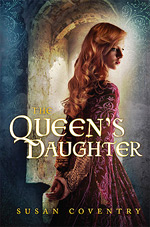
I'm doing an interview over at Whatcha Readin', Books?: A Teacher/Learner's Blog. Come on over and browse around her lovely blog. (And check out my answers to Teacher/Learner's questions about writing and The Queen's Daughter.)

ESCAPE TO THE PAST WITH: The Killing Way by Tony Hays

If you like historical mysteries, you might want to check out Tony Hays’s medieval detective series. I was attracted to book one, The Killing Way, because it was billed as "An Arthurian Mystery." Being a great fan of Arthurian lore, I thought, why not?

It wasn’t quite what I expected. It doesn’t rely on the typical legends. In The Killing Way, young Arthur is about to be named successor to the High King, but he has dangerous rivals. When a serving girl is found dead and mutilated at Merlin’s doorstep, Arthur calls on an old war comrade, the one-armed Malgwyn, to investigate. Malgwyn’s success in battle (so impressive that he would be remembered by Arthur) was due to a keen intelligence as well as a burning hatred of Saxons—they’d killed his wife. But his career ended when a Saxon lopped off his arm. Arthur saved him, but Malgwyn believes a one-armed man is useless. He hates Arthur for denying him an honorable death on the battlefield. He’s been a bitter drunkard ever since. Now this "hard-boiled" drunkard takes up the challenge and must solve the mysterious death before Merlin is blamed, compromising Arthur’s chances for the throne.

Familiar Arthurian characters are present in the story but portrayed in an unconventional way: Gareth is a bard; Kai is a young love-struck boy; Tristan is King Mark’s son and a bit of a sop. It caught me off-guard, but given the subject matter, this approach was better than interweaving conventional Arthurian fantasy into the mix. Instead of fantasy, the author blended politics, Druid religion, and a top-notch detective story. Malgwyn is a fascinating character. The series is off to a great start. I have book two, The Divine Sacrifice, on my TBR pile.

Saturday, November 27, 2010

The YA Historical Fiction Challenge

The challenge has begun! The books I've read are listed below, with links to reviews (if reviewed.)


I've already signed on for one challenge for 2011, but when I came across this one, I couldn't resist. Sab at YAbliss is hosting a YA historical fiction challenge. There are three levels:

Level 1 is 5 YA HF books in 2011
Level 2 is 10 YA HF books in 2011
Level 3 is 15 YA HF books in 2011.

I'm going to try for level 2, and review as many of those as I can.

Check out the YAbliss blog post for a definition of what will count toward the challenge and links to examples of books.


RULES:
  • All Historical Fiction books must be YA or MG
  • Books don't have to be 2011 releases.
  • Anyone can join. Please link (on the YAbliss blog) to a public (web) place Sab can find you.
  • You can join at anytime. The challenge runs from January 1, 2011 to December 31, 2011

Wednesday, November 24, 2010

YA BOOK REVIEW: Revolution by Jennifer Donnelly

Despite seeing wonderful reviews, I almost did not buy this book. When I read the blurb, it seemed more contemporary than historical. The premise, in a nutshell, involves a modern-day teen who finds a diary and then travels back in time. Normally, I like to stick to one time period at a time. It isn’t an absolute rule- that would be silly- but in general, books that involve long-lost diaries or time-slip portals don’t appeal to me very much. Maybe because the fiction in the work announces itself too strongly, whereas in more straightforward historicals I can more easily lose myself in the fictional world.

None of this matters, though, because I did decide to read Revolution by Jennifer Donnelly. And if I’d allowed myself to be dissuaded by preconceived notions of how I might react, I would have missed out on an incredible book.

Andi Alpers is a senior at an elite Brooklyn Heights private school where she had excelled as a student until two years prior when tragedy claimed the life of her younger brother. Andi blames herself for his death. Her mother is incapable of dealing with the loss and can offer no support. Her father, a Nobel-prize winning geneticist, had almost abandoned the family for his work even before his son’s death. In the aftermath of the accident, he made the break more complete. Andi is depressed to the point of suicidal. Pills, one good friend, and her music, are all that keep her alive, barely alive. She can’t find it in herself to care about school anymore and she is about to be expelled. When her father learns of this, he returns to whisk her off to Paris for winter break. There she is to get her senior thesis back on track while he works on a research project.

In Paris, Andi discovers the diary of Alexandrine Paradis, a seventeen-year-old girl who lived during the French Revolution. Alexandrine dreams of becoming an actress, but her day-to-day life takes her instead to the court of the royal family. There she is assigned the role of entertaining the young prince. Although self-serving at first, she gradually becomes devoted to the boy and makes his fate her own.

Andi becomes more and more involved in the story of Alexandrine and the prince, a story that is entwined with her own on multiple levels. As she delves deeper into the tragic past, a past she is helpless to change, Andi has to find a way to emerge from the world of the dead.

What made this book stand out was the powerful voice of its protagonist. Andi is in severe emotional pain. She lashes out. But she is, at the same time, a girl of great wit, intelligence, and kindness. I never found myself getting annoyed with Andi even when she was at her most self-destructive. She was a thoroughly believable character which made the time travel episode easier to accept. By then, I was willing for Andi to go where she had to go to find whatever she needed to find. The book deals with difficult issues. Moreover, it walks the reader through details about music, the French Revolution, and even brushes with genetics without ever bogging down. The relationships are moving, the dialogue entertaining. I can’t praise this book enough!

Monday, November 22, 2010

ESCAPE TO THE PAST WITH: My Name is Mary Sutter by Robin Oliveira

My Name is Mary Sutter by Robin Oliveira had great buzz. This is generally the type of book that I love or discover pretty quickly that I'm not going to like and don't read. (By this type, I mean historical fiction that focuses on medical people or medical themes.) I read the opening scene while browsing in a bookstore and was so captivated I bought it without hesitation, eager to read more. But by the time I finished, my overall reaction was...lukewarm.

Mary Sutter is a midwife in antebellum Albany, New York, who enjoys a great deal of local renown for her skill. Her competence springs in a small part from compassion for the women she cares for, but mainly from a strong intellectual curiosity. And Mary has outgrown midwifery. She wants to know more. She is desperate to become a surgeon. Unfortunately, she lives in a time when women are not admitted to medical schools and no surgeon will accept her as an apprentice.

The start of the Civil War provides Mary with an opportunity to pursue her goal. Beginning as a nurse, she puts herself under the tutelage of a surgeon whose circumstances are as desperate as her own. Gradually, she absorbs knowledge from him and begins to learn surgery.

This is the kernel of the book. Other issues are swarming around to round out the book: family, duty, love, the politics of the war itself. The author succeeds in presenting the war in all its gritty horror. She succeeds in showing the medical realities and shortcomings very realistically. Mary is indeed an admirable woman, strong in the face of human suffering, intelligent, and capable.

Mary was, however, human. And I suppose it was in showing her human side that the book bogged down for me. Because there was a parallel plot. Mary had a failed romance. She misinterpreted a man’s interest and could not bear to be around the happy woman he married instead. And so, she fled Albany for Washington to become a war nurse. She refused all entreaties to return home.

What was Mary's motivation after all? Sometimes, it seemed that it was not her vocation that drove her to and kept her in Washington, but simple spite. Perhaps having been hurt once, Mary was not going to open herself up to caring about people again. Humanity, yes; people, no. Her service to the wounded seemed not compassionate, but detached. I couldn't exactly fault her for this. Considering she lived surrounded by slaughter, she would have to develop a degree of emotional detachment or be destroyed. The novel portrayed the woman and her situation realistically. But I began to find Mary Sutter a bit tiresome. I wanted to finish the novel, but it wasn’t something I looked forward to reading.

So my summary is that this is a well-written, well-researched portrayal of a courageous and intelligent young woman whose determination to become a surgeon takes her onto the battlefields of the Civil War. Historical fiction fans who want to see strong female protagonists and who like a lot of historical detail will likely enjoy this. I think my negative reaction to Mary might have just been an overreaction to the way she dealt with her feelings of being jilted and the avoidable tragedy that results.

Saturday, November 20, 2010

Back to the Classics Challenge

One of my goals for the new year was to find a reading challenge to participate in. As a new blogger, I wanted to take it pretty easy to start off until I learn the ropes of this whole challenge thing. (Am I defeating the purpose behind the idea of a challenge?) But I found one that sounds just right. Have a look at the Sarah Reads too Much: Back to the Classics Challenge 2011.

Essentially the challenge is to read 8 classics in the first six months of 2011. They must be:

1. A banned book.
2. A book with a wartime setting.
3. A Pulitzer Prize (fiction) winner or runner-up.
4. A Children's/Young Adult classic
5. A 19th century classic
6. A 20th Century classic
7. A book you think should be considered a 21st century classic.
8. Re-read a book from your high school/college classes

If you don't have a blog, you can comment on your progress in the comments section on Sarah's blog-- the challenge is open to all!

I've already picked out some of the books I plan to read and I'm still pondering the choices for others. But now I have my first challenge and a firm set of goals for 2011!