Saturday, November 23, 2013
STACKING THE SHELVES: I bought books!
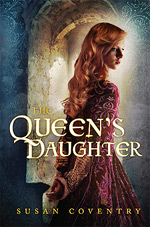
I've been on a library binge lately, mainly because I have no room left on my bookshelves. But it's been so long since I've splurged on new books for myself that I couldn't help it. I bought two historical novels.
This is an editor's choice in the latest Historical Novels Review. The link is to the review. While you're there, you can check out the HNS website. If you're a historical fiction fan, there's no better resource!
My second new acquisition is Longbourn by Jo Baker. I haven't been drawn to Jane Austen spin-offs even though I love Austen. Maybe it's because I read her books so long ago I feel I should re-read the originals before going off on tangents. But this one had a unique sounding premise and I fell for it. So, we'll see what I think when I read it! (Link is to goodreads page)
This is my first time taking part in Stacking the Shelves hosted by Team Tynga's Reviews. Look at all the wonderful books people are reading!
Labels:
historical fiction,
meme
Friday, November 22, 2013
BOOK REVIEW: A Beautiful Truth by Colin McAdam
A Beautiful Truth by Colin McAdam came recommended in my library’s new fiction newsletter. Although it had a ring of "contemporary relationship novel" to it–not my usual cup of tea– the relationships were unique enough to catch my interest and I requested the book.
The premise, as I understood from the blurb, was that a chimpanzee, raised by humans, must inevitably be sent to a primate research facility where he would not be able to fit in among his own kind because he had been raised as a human. It would be a story of love, loss, and loneliness, but the twist to make it interesting would be its unusual protagonist. I approached the read with some trepidation because I expected it to be emotionally brutal. However, I didn’t find it draining; instead, it was emotionally rather flat. Other readers have certainly not had that reaction to the book, but I just never did connect with any of the characters, human or chimpanzee.
Walt and Judy are an affectionate Vermont couple who discover that they cannot have a baby. Judy is devastated. Walt wants only to see Judy happy, so he manages to acquire a baby chimpanzee for her through means that are shady although not exactly illegal. They raise the chimp as a son, not a pet, naming him Looee. They understand that he is not human, but they expect others to treat him as a part of their family. As Looee grows older and larger, even they have to come to grips with his alarming strength and disruptiveness, so they build a concrete addition to their own house so that Looee can have a place of his own. They spend time with him, but increasingly need time for themselves.
Interspersed with this family drama, there are alternating chapters taking us to a primate research facility in Florida. The facility has started as a center for research on primate behavior and psychology. The director worked with language and had taught two of the chimps to recognize symbols for words and even to form sentences to communicate. The book takes us into the heads of the chimps, particularly Mr. Ghoul, one of the chimps involved in the original set of experiments. The author puts words (some made up) into Mr. Ghoul’s head –what he thinks the chimps would be thinking. It’s more or less convincing–convincing to me, but I’m a human. What do I know about what a chimp would actually be thinking?
Over time, the facility grows. Its focus expands. There are more chimps with Mr. Ghoul and the director stops trying to get them to communicate with people and now simply studies how they interact with each other. In other areas of the facility, medical testing is going on.
Eventually, Looee outgrows his Vermont family. He has become dangerous. The only solution is to send him to a place that knows how to house chimps in a way that is safe for humans. Looee is sent to Florida.
It’s a long hard road for Looee. It’s not a pleasant situation for any of the chimps. (Understatement. A section of the book is given over to moralizing about the inhumanity of medical research on animals.) It’s not particularly pleasant for any of the humans in the book either. While I found the whole thing a curious and interesting exploration of the various "what-ifs?" I’m not sure, at the end of it all, what the author’s "beautiful truth" was supposed to be. That we are not so very different from chimps? It isn’t exactly a revelation.
Labels:
contemporary
Monday, November 18, 2013
BOOK REVIEW: The Absolutely True Diary of a Part-Time Indian by Sherman Alexie
Our next book group book is The Absolutely True Diary of a Part-Time Indian by Sherman Alexie. It’s been on my I-should-really-read-this list for a long time, but it wasn’t something I particularly wanted to read. I’m glad our book group chose it, because I enjoyed it much more than I expected.
Junior is an Indian growing up on a reservation in Spokane, Washington, where poverty, alcoholism, and violence are the norm. He is further disadvantaged by having been born with hydrocephalus and a seizure disorder, so he refers to his brain as damaged. However, there is no evidence of that. He’s the smartest kid in his school and a good (coordinated) basketball player. Still, he tells us that he stutters and lisps and wears lopsided glasses. Being skinny and awkward in appearance, he’s a natural target.
Despite the many disadvantages of his situation, Junior cannot be kept down. He wants to be a cartoonist (examples included), and he allows himself to dream. When a teacher tells him that there is no hope on the reservation so he has to leave before he is trapped like everyone else, Junior decides to transfer to an all-white school in a neighboring town.
Junior’s adolescent male observations on life, love, alcohol abuse, education, basketball, friendship, and true tragedy make this a touching and painful story, but also a hopeful and, at times, a funny one. Junior has a way of bringing out the good in people–sometimes it takes a while, but if there is good, it’ll work its way out. Unfortunately, while there may be an optimistic end in sight for Junior, the overall picture of the reservation life and the people he must leave behind remains bleak. And because it shows us that picture, too, this is an important book.
Labels:
contemporary,
YA
Wednesday, November 13, 2013
ESCAPE TO THE PAST WITH: A Hundred Summers by Beatriz Williams
I should have read A Hundred Summers by Beatriz Williams over the summer because it would have been a great beach read. (Or vacation read since I’m not a beach-goer.) But this historical love story set primarily in a vacation community (Seaview) on the beachfront of Rhode Island in the 1930s is enjoyable enough to read any time.
The protagonist is Lily Dane, a smart young woman from an elite family who has spent her life summering in Seaview. For most of her life, she had been best friends with Budgie Byrne–outgoing, wild, indulged, beautiful Budgie who makes Lily feel staid and bland in comparison. In 1931, while in college, on a date at a Dartmouth football game, Budgie introduces Lily to Nick Greenwald, a friend of her boyfriend. Lily has been forewarned about Nick–he’s Jewish. This doesn’t matter to Lily, though it will to her parents. For Nick and Lily, it’s love at first sight.
The novel flashes back and forth in alternating chapters between 1931 and 1938. A mystery of sorts is unfolding. Because while Nick and Lily’s college romance is rapidly progressing in 1931, leading to a forbidden engagement, seven years later it is Budgie and Nick who appear in Seaview as Mr. and Mrs. Greenwald, newlyweds. Lily is living with her all-but-absent mother and a six-and-a-half-year-old sister, Kiki.
The old-line Seaview community does its best to ostracize Nick and Budgie. Nick rarely bothers to make the commute from New York, but Budgie is determined to repair the damage to her friendship with Lily. Even after all this time, Lily is unable to break away from Budgie. Moreover, she is infuriated by the bigotry of those who would shun Nick. And so they slip into the cracks of her world.
This is a fun read. The clues to the various mysteries of the relationships are not too deeply hidden, so you can guess what the revelations are going to be. Nevertheless, the story barrels along to an exciting and satisfying conclusion.
This is my 34th book read for the Historical Fiction Challenge hosted by Historical Tapestry.
Labels:
historical fiction,
twentieth century,
U.S. History
Monday, November 11, 2013
ESCAPE TO THE PAST WITH: Burial Rites by Hannah Kent
Burial Rites by Hannah Kent has been receiving wonderful reviews and the plot summary made it irresistible, if a little daunting. As added encouragement, during a quick, curious perusal of the 2013 Best Historical Fiction Good Choice Awards on goodreads, I noticed it was one of the picks. I’ve only read a couple of the nominees: The Painted Girls by Cathy Marie Buchanan and Z. A Novel of Zelda Fitzgerald by Therese Anne Fowler. And I have A Hundred Summers by Beatriz Williams next on my list since it, like Burial Rites, is a library book that can’t be renewed. I won’t vote because I can’t even choose a favorite from among the books I have read and don’t think it would be fair to exclude the ones I haven’t. But I’m pleased to have this list of recommended historical fiction!
Burial Rites is a gorgeous but dark story of the last person to be publicly beheaded in Iceland–an execution that took place in the early 1800s. The historical details are meticulously researched, but the woman’s thoughts, words, and, of course, the motivation for her crimes are fictionalized. It is beautifully done. The setting is cold and merciless. The grinding poverty and barrenness of the life of Agnes Magnusdottir (or Agnes Jonsdottir–the unfortunate woman is not even granted the dignity of a solid identity) makes for a relentlessly cruel story. We know she is condemned to die. She knows she is condemned to die. After all, she is a convicted murderess.
Agnes, along with two fellow servants, has been found guilty of murdering her master and his guest and then burning down his farm to hide the crime. She is sentenced to be executed, but while awaiting confirmation of the sentence, she is sent to an isolated farm in northern Iceland, essentially to be warehoused.
Margret and Jon are the unfortunate couple chosen to be her warders. They don’t want the burden or responsibility, especially since they have two daughters. It isn’t safe to house a murderess, nor do they want their daughters exposed to her influence. But when Agnes arrives–withdrawn, frightened, angry– she is not what they expected. She’s a hard worker. She’s knowledgeable. She’s kind. Agnes is not inclined to talk about what has happened, nor would the family ask. However, a local priest, Toti, has been chosen to be her spiritual advisor, and he coaxes words from her. Eventually, they–and the reader–learn the truth of Agnes’s life and of the two men’s deaths.
Does it matter that she has a chance to speak? Does it matter that the truth is told? With all the rumors that have defined her life, will it make a difference to her that someone hears her side? It’s a brutally harsh book and it could be argued both ways. Agnes never stood a chance. But this is a beautiful story about compassion. Maybe Agnes’s story makes a difference in the lives of her warders. Maybe books like this make readers think a little more deeply. I’ll certainly be looking for Hannah Kent’s next book.
This book is a historical fiction challenge book. The challenge is hosted by Historical Tapestry.
Labels:
historical fiction,
nineteenth century
Friday, November 8, 2013
BOOK REVIEW: Breakable by Aimee L. Salter
Bullying is certainly not new. However, awareness of the problem has been raised in recent years, particularly as the pervasiveness of social media has made cyber-bullying an increasing threat with the power to devastate young lives. So it is no surprise that YA contemporary fiction is reflecting today’s world with novels centered on teen protagonists who must deal with bullies.
Breakable, a new release by Aimee L. Salter, is a compelling story about seventeen-year-old Stacy, who has been bullied for years by a clique of fellow students who used to be her friends. The daily torment escalates when Stacy’s one remaining friend, a boy named Mark, begins to date one of the worst of the bullies, a nasty scheming girl named Karyn. Karyn is able to hide her true personality from Mark, who is blinded by her pretty face and popularity.
Stacy has been quite desperately in love with Mark for a long while. It’s difficult enough that he just sees her as a friend, but when he starts going out with Karyn, it’s more than Stacy can take. Karyn and the rest of the crew are all too aware of Stacy’s feelings and use this as additional ammunition against her.
There is one more person in Stacy’s corner. For years, Stacy has been communicating with her future self, "Older Me," whom she can see in mirrors. Stacy relies on "Older Me" to guide her through the impending crisis, but as the bullying spirals out of control, even her future self seems to fail her.
Breakable is a fast-paced read with memorable characters. Salter is able to get inside Stacy’s head to show both the emotional frailty and the resilience of a teenager who has been victimized for years but who retains the capacity for a strong and generous love. It’s a heart-wrenching tale of a girl in crisis and a powerful book about the long-lasting effects of bullying.
Labels:
contemporary,
YA
Wednesday, November 6, 2013
BOOK REVIEW: The Man Who Shot Liberty Valance. The Great Western Stories of Dorothy M. Johnson
My memory is getting so awful. It’s really true that multitasking on the internet is disastrous for the brain. Somewhere, on some site, some time in the not too distant past, I read a blurb about Dorothy M. Johnson. She died in 1984, so it wasn’t an obituary, but for some reason the article was bringing up Johnson’s writing and the significance of her being a woman who wrote westerns. People told her that women couldn’t, but she persevered, and she wrote some of the best known and most respected western fiction of her day. Perhaps of all time.
I had never heard of Dorothy M. Johnson, but I had heard of some of her works: A Man Called Horse and The Man Who Shot Liberty Valance. I didn’t know why those titles were familiar–movies probably, because I hadn’t read the stories. (And in fact, looking up the movies, I did see a least a scene or two of A Man Called Horse when I was very young. Some of it was vivid enough to stick in my mind.) But I decided I needed to do the reading.
I think the book may have been lost somewhere in the library because it took a long time to find its way to me even though I was the only one on the request list. It arrived at the same time as a particularly large library haul. I put it near the top of the pile because it’s short and then I read it in a few hours. It was a few hours very well spent.
The Man Who Shot Liberty Valance. The Great Western Stories of Dorothy M. Johnson is a collection of four short stories including the title story, A Man Called Horse, The Hanging Tree, and Lost Sister.
I’m ready to join the choir singing Dorothy Johnson’s praises. The stories are quite perfect examples of the genre with spare prose and straightforward plots that nevertheless manage to kick a little. She recreates the Old West and populates her tales with characters that seem very real, or that seem to be the kind of characters I imagine populated the Old West. I won’t describe the plots of each, but there are gunfights, sheriffs, and prospectors for gold, a man caught by Indians who stays for awhile, and the return of a woman taken captive by Indians when she was just a girl. What happens in these stories is not always what you might expect, but it makes you pause and think.
These are historical, so I'm adding them to my list for the historical fiction challenge hosted by Historical Tapestry. (I'm curious to see just how much historical fiction I read in a year.)
Labels:
classics,
historical fiction,
U.S. History
Subscribe to:
Posts (Atom)