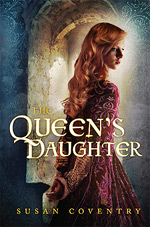
Lately, when I’m looking for something diverting and fun to read, I’ve been turning to Georgette Heyer. Her books are predictable, sure, but her characters are so nicely drawn and the witty banter is always entertaining. I decided I deserved a treat, so I plucked Venetia from my pile of library books and dove in.
Venetia is a beautiful, charming, and frank-minded young woman of good family who has reached the unfortunate of age of twenty-five still unmarried. She lives a secluded life in the country since her father was a selfish recluse who refused to tolerate company after the death of his much-loved wife. (Venetia was young when her mother died and barely remembers her.) Venetia has an older brother, Conway, who escaped first to the university and then to the army. She also has a younger brother, seventeen-year-old Aubrey. Aubrey is extremely intelligent and scholarly but has "a weak hip" and a pronounced limp. The upshot of all this is that upon the death of her father, Venetia was left running the family estate and caring for her brother until such time as Conway saw fit to return to his responsibilities. In three years, Conway has not seen fit to return.
This leaves Venetia in an awkward situation with regards to her future. Her father had never allowed her to venture out into company and he received almost no visitors. He did not let her go to her aunt’s home in London for her coming-out season. So, Venetia remained at her manor (Undershaw) to be courted now by the only two eligible men in the town: a rather ridiculous boy several years her junior who fancies himself a romantic hero and a pompous, self-righteous friend of the family named Edward Yardley, who considers her his property already.
Venetia’s only other alternative is to wait for Conway’s return and then set up housekeeping for herself somewhere with Aubrey. This is actually what Venetia, who is shockingly independent, prefers, though no one can believe it.
And then, one day, while out picking blackberries on her ever-absent neighbor’s property (The Priory), she stumbles across the neighbor who–embarrassingly--isn’t absent. Lord Damerel is a rake with a terrible reputation. At their first meeting, he demonstrates what a true scoundrel he is by grabbing her and kissing her. (He thinks she’s one of his tenants–as if that is an excuse. But apparently it is.) Venetia is scandalized, but she’s a lot more open-minded than her neighbors and what she has seen intrigues her rather than putting her off. Damerel is more than intrigued by Venetia and resolves to prolong his stay in the country.
A few days later, Aubrey suffers a riding accident and Damerel happens to rescue him. This provides the opening for Venetia to visit the man who is shunned by everyone of her acquaintance. In a short while, she and Damerel and Aubrey are fast friends.
The reader can see where this will eventually lead. Damerel will be reformed by the innocent Venetia without losing any of his rakish appeal. Venetia will grow wiser in the ways of the world without losing any of her innocent charm. And this is Heyer, so while illicit liaisons are alluded to in the broader world, the romance between the hero and heroine does not move to the bedroom. Despite knowing in advance how everything will end, the pleasure of reading the book is seeing how it gets where it is going. Venetia has a delightful cast of characters. I enjoyed whiling away the hours following the twists and turns of the relationship between the not-so-jaded-as-he-imagined-himself-to-be Lord Damerel and the not-so-green-as-everyone-thinks-she-is Venetia.
I'll add this to my historical fiction challenge list. The challenge is hosted by Historical Tapestry.
Monday, November 4, 2013
Friday, November 1, 2013
BOOK REVIEW: The Burgess Boys by Elizabeth Strout
Elizabeth Strout writes some painfully insightful contemporary fiction. I loved Olive Kitteridge, despite its rather bleak and lonely portrayal of its New England cast of characters. Abide With Me also impressed me. (But I confess after looking back at my review that I’m having trouble remembering details of the plot.) So I put my name on the library waiting list for The Burgess Boys as soon as it came out. The topic is not one that would normally have called out to me. It falls into the category of "contemporary dysfunctional family," but I wanted to read whatever Strout wrote next.
In the prologue, a writer and her mother gossip about a troubled family from their hometown in Shirley Falls, Maine. Somewhat estranged themselves, recounting the troubles of this other family is one thing that brings them together. The writer eventually decides to tell the story of this family, the Burgesses, although she is a little concerned about what people will think of her for writing a book about people she knows. It’s an odd jumping off point for the story and seems a little unnecessary. In fact, the superfluousness of the prologue made me think that there really must be some sort of literary significance to it. Maybe the point is that we are all a little voyeuristic about other people’s lives and tend to use stories of other peoples’ troubles to diminish our own problems the way the narrator and her mother do. Or perhaps the point is the more obvious one that the narrator’s mother makes: nobody ever knows anyone. But Strout works very hard to get us to know the Burgesses.
The story itself is an interwoven tale of painful sibling dynamics, marital woes, and social dysfunction, peppered through with tiny (very tiny) rays of hope.
The title is a bit of a misnomer. There are three Burgesses, two boys and one girl. Jim Burgess, the eldest, is the leader, the rock of the family. He possesses a certain charisma that wins people over, but the reader, who gets to see through him, is not so easily won. He has grown up to be a wildly successful defense lawyer. The twins, Bob and Susan, are a few years younger. Bob has tried all his life to emulate Jim. He’s a lawyer as well, but he works for the legal aid society. He has not achieved Jim’s financial success or, for that matter, any of Jim’s admirable stability. Bob is practically an alcoholic. Yet Bob is, we are made to understand, actually a nice guy for all his ineffectiveness. Both men have escaped Maine and now live in New York City. Jim is married to a wealthy Connecticut woman named Helen. They are recent empty-nesters. Bob, childless, is divorced from Pam, but remains on friendly terms with her. The female sibling, Susan, has stayed in Shirley Falls where she works as an optometrist. Her husband abandoned her and their awkward son, Zachary, now a teenager. Susan is embittered, lonely, and "no longer pretty" as everyone is quick to point out.
None of the siblings is particularly happy. A tragedy in their past may be the reason or it could be that all Strout’s characters are basically discontent. But the Burgesses do have a whopper of a history to account for their underlying maladjustment. While young, they suffered the loss of their father in a horrifying accident. The three children were playing in their car at the top of the hill. The four-year-old Bob messed with the gears and the car rolled down the hill and killed him. And while no one blamed him, and no one ever speaks of the accident, poor Bob carries that burden around with him. And the siblings did and do blame him.
The story begins when Zachary (Susan’s teenage son) tosses a pig’s head into a mosque in Shirley Falls during prayers during Ramadan.
He has no real reason for doing this beyond a vague hope for some attention from his absent father. Zach is a very lonely, depressed boy. However, Shirley Falls is experiencing some racial tension and a clash of cultures. Although the Maine town prides itself on being warm, welcoming, and liberal, an influx of Somali refugees has tested them and found them wanting. Many of the inhabitants are more strongly prejudiced than they want to admit.
Zach’s stupid act is interpreted as a hate crime. Susan summons her lawyer brothers home to Maine for support. A hornet’s nest is stirred up as old patterns of sibling interaction are revived and intensified.
Strout is at her best with character sketching and making people seem very real, very large warts and all. Although it is difficult to like any of the siblings or their spouses, it is possible to understand and sympathize with them. The plotting of the book is somewhat predictable and is not the strong point, although the story did hold my interest throughout. The book deals with some ambitious themes and may be trying to do too much. But the pictures Strout draws of the bonds between the siblings that ultimately, despite their dysfunction, are strong enough to carry them through the bitterest trials, make this a satisfying family drama.
Labels:
contemporary,
literary
Wednesday, October 30, 2013
WAITING ON WEDNESDAY: Breakable by Aimee L. Salter
"Waiting on Wednesday" is a weekly blogging event hosted by Breaking the Spine, that highlights eagerly anticipated new releases.
Here's the book I'm looking forward to reading--to be released next week!
The goodreads blurb is:
When seventeen-year-old Stacy looks in the mirror she can see and talk to her future self. “Older Me” has been Stacy's secret support through the ongoing battle with their neurotic mother, relentless bullying at school, and dealing with her hopeless love for her best friend, Mark.
Then Stacy discovers Older Me is a liar.
Still reeling from that betrayal, Stacy is targeted again by her most persistent tormentor. Only this time, he's used her own artwork to humiliate her - and threaten her last chance with Mark.
She’s reached breaking point.
Literally.
Labels:
contemporary,
meme,
YA
Sunday, October 27, 2013
ESCAPE TO THE PAST WITH: Mrs. Lincoln's Dressmaker by Jennifer Chiaverini
DISCLAIMER: I received this book for free from the goodreads first reads program.
I really wanted to read this book! Mary Todd Lincoln and Abraham Lincoln are fascinating individuals and even more interesting is their complex relationship. Countless shelves can be filled with what has been written on Lincoln during the White House/Civil War years. And yet there always seems to be more to explore.
In Mrs. Lincoln’s Dressmaker, Jennifer Chiaverini uses the viewpoint of Mrs. Lincoln’s modiste, her friend and confidante, Mrs. Elizabeth Keckley, to present a different, more personal, side of the Lincolns during the White House years.
Mrs. Keckley was born into slavery but was able to buy her freedom thanks to her skill as a seamstress. She moved to Washington, D.C. where she began making dresses for the elite of society, including Mrs. Jefferson Davis. She was uniquely placed to hear the women’s thoughts on the impending arrival of the president-elect, Mr. Abraham Lincoln, as well as all the talk of the increasing likelihood of southern states’ secession from the union.
After Lincoln’s inauguration, when many of Mrs. Keckley’s patrons left for destinations further south, she was able to secure a chance to make a dress for Mrs. Lincoln. Before long, she was Mrs. Lincoln’s primary modiste and a valued part of the Lincoln household. From that vantage point, she had an intimate knowledge of the Lincolns’ interactions with each other, of Mary Lincoln’s troubles (her extravagant expenditures, her social gaffes, her difficulties with her husband’s cabinet members, and her hot temper), and of some of President Lincoln’s political quandaries. However, her discretion and loyalty during those years was absolute.
Chiaverini does a very good job of presenting well-researched material. It’s a sympathetic portrait of Mary Lincoln but by no means a flattering one. As for the president, through Mrs. Keckley’s admiring eyes, he is always given the benefit of the doubt even when she doesn’t understand why is isn’t moving faster or farther to help her people.
In addition to the president and first lady, we are presented with the life story of Mrs. Keckley, a talented, level-headed, gracious woman who ends up quietly devoting a good portion of her life to the Lincolns. For a time, it is greatly to her benefit but after Lincoln’s assassination, she continues to stand by Mrs. Lincoln though she has nothing further to gain and, in fact, has quite a bit to lose.
This is a quiet, contemplative type of book. In some ways, it reads like a very interesting biography more than a novel. There is a lot of introspection, letter writing, overhearing of gossip, and sharing of news. The big historical events happen off-stage. So while it’s difficult to feel immersed in the story in an emotional way, it’s a wonderful imagining of the life of Mrs. Keckley and her view of the Lincolns.
I’m adding this on to my list of books for the Historical Fiction Challenge hosted by Historical Tapestry.
Thursday, October 17, 2013
BOOK REVIEW: Nikolai Gogol. The Collected Stories
I’m getting nervous about my last two challenges. Time is growing short. Some of the back-to-the-classics challenge books are optional, but I still have to read my required pre-18th century or 18th century choice-The Odyssey. Unfortunately, my son has to read it for school, so he has first dibs on the book. Why didn’t I read that one first?
In the meantime, I decided to read my choice for classic short stories: Nikolai Gogol- The Collected Stories. I bought this collection about four years ago (after reading The Namesake by Jhumpa Lahiri which mentioned Gogol’s The Overcoat prominently). But it’s been collecting dust. I’m not much one for short stories.
Gogol is a Ukranian-born Russian writer who lived in the early 1800s. I’m no student of Russian literature, so all I’ve learned about him is taken from the book’s introduction. His earlier stories are influenced by Ukranian folklore and the later stories are more sophisticated but absurd. He had a great deal of influence over other Russian writers. None of this intro prepared me to love this book as much as I did.
What are these stories? Possibly the best known are The Nose; The Overcoat; and maybe The Madman’s Diary, which were included in this collection. His earlier books were Evenings on a Farm near Dikanka, Vols I and II, and included in this collection from those books were St. John’s Eve and Christmas Eve. There were a total of thirteen stories in the collection, a mixture of earlier and later stories. And they were all captivating. There were similarities in them, but there was a difference in tone between the earlier stories and the later ones. Actually, I enjoyed the earlier ones more.
The "folklore-ish" tales were conversational in style. And even though the narrator wandered around in tangents, he was a fantastic storyteller, always drawing me in with the wild details. There were witches and devils galore, so maybe it was a kind of magical realism, but it was like nothing I’ve read before. Not so much scary as matter-of-fact, as though how do you live with these things if these things are real, and they scare you, but you go on with your life because they are part of life.
The middle portion of the book had stories that were vignettes of Russian countryfolk’s lives, humorously and sadly portrayed. One story that I thought was brilliantly done started with a chatty narrator complaining about his memory being like a sieve. He heard a wonderful story from a great storyteller, so he insisted the man write the story down. Awhile later, he noticed that his wife had used some of the pages to wrap cakes. So- if you want to know the ending of the story, you have to find the storyteller. The narrator gives great detail on where to locate the storyteller and how to recognize him. Then he launches into the story. It’s a detailed and increasingly interesting little family drama. I KNOW that the ending of the story is going to be lopped off. Nevertheless, I continue reading. I get sucked in to the dilemma. I want to know how the conflict is going to be resolved. And when the tale ends abruptly, leaving me hanging, I have no one to blame but myself. Who would DO that to a reader?
The Overcoat is the last story in the collection. It’s a sad story about a downtrodden clerk, content-even happy- in his job, but poor. It comes to pass that he needs a new coat. He scrimps and saves and plots with a tailor friend to have a new coat made. The thrill of the new coat becomes the focus of his life and when it is finally finished, it opens a whole new world of possibilities for him. Except that the first evening he wears it, the coat is stolen. When he attempts to seek help from the authorities, he is ignored and ridiculed. He sickens and dies. His ghost takes a sort of muted revenge. The bare bones outline doesn’t do the story justice. Gogol’s writing is able to wring every last bit of feeling from it.
I’d love to read the stories again in an annotated version to help extract more of the meaning from them, because I was reading quickly just to enjoy the stories and the beauty of the words on the page. But I’m sure there are layers upon layers in there. One of these days, when I’m not running in so many different directions, I’m going to pull Gogol back down from my shelf.
You can check out all the classics being read by many different bloggers at the back-to-the-classics challenge hosted by Sarah Reads Too Much.
Labels:
classics,
literary,
nineteenth century,
Russia,
short stories
Monday, October 14, 2013
ESCAPE TO THE PAST WITH: Mortal Arts by Anna Lee Huber
Anna Lee Huber’s historical mystery romance series "A Lady Darby Mystery" is quite addictive. I recently read The Anatomist’s Wife and decided to just move right on to book two, Mortal Arts, while the characters and plot were still fresh in my memory. I’m glad that I did. Book two was as enjoyable a read as book one.
The protagonist, Kiera (Lady Darby), is on her way to Edinburgh with her pregnant sister and brother-in-law when their journey is interrupted. They detour to the manor of an old friend, Michael Dalmay, who is engaged to marry Kiera’s younger cousin. However, the wedding plans are in disarray. Michael’s older brother, Will, who happens to be Lord Dalmay, has returned to the family home after having been missing for ten years. Kiera thought he was dead, but in fact, he had been in an insane asylum.
Will Dalmay, many years older than Kiera, fought in the Napoleonic War and returned home with PTSD. Of course, it was not recognized or diagnosed as such in those days. His own father grew alarmed by his symptoms and had him locked away, secretly. It was not until after the death of the father that Michael was able to have his brother released.
Unfortunately, Will’s condition only worsened in the years of his confinement. There are rumors that he has become violent. And now a local girl has gone missing.
Fortuitously, Nicholas Gage is also a friend of Michael Dalmay’s, and he has been summoned to the manor as well, or so he says. Once again, Kiera and Gage join forces to solve a mystery. And once again, their own interpersonal struggles help and hinder the progress of the investigation. Kiera needs to be able to trust Gage, but he’s not completely honest with her. She needs to be able to trust Will, but Will doesn’t even completely trust himself.
The plot twists keep the book moving right along, but the development of the relationship is what makes the book most compelling. I’ll be looking for book three.
This is another book added to my historical fiction challenge, hosted by Historical Tapestry.
Labels:
historical fiction,
mystery,
nineteenth century,
Scotland
Friday, October 11, 2013
BOOK REVIEW: Private Life by Jane Smiley
Jane Smiley is an incredible writer. I remember being awed by A Thousand Acres, even though it’s been a good twenty years since I’ve read the Pulitzer Prize-winning book. Being the historical fiction fan that I am, I loved the epic tragedy Greenlanders even more. (I was, I have to admit, a little disappointed by Moo.) But it’s been awhile since I’ve read Smiley’s work. When Private Life came out a couple of years ago, I thought the premise sounded interesting. It’s historical, set in the late 1800's through WWII. It’s literary. Character driven. I bought the book. Still, it never leaped off the shelf for me to read. Something else always appealed to me more. To inspire me, I chose it as one of my TBR pile challenge books.
It’s a beautifully written book. However, Jane Smiley does not do cheery.
Margaret Mayfield is the downtrodden heroine of this novel. The daughter of a somewhat overbearing Southern physician, Margaret suffers the death of her brothers during her childhood followed by the suicide of her father. Afterward, her mother seems to gain strength–a strength of purpose to see her daughters safely married off. Margaret’s livelier and lovelier sisters achieve the goal but Margaret lacks social skills.
At the nearly unmarriageable age of twenty-seven, Margaret has a stroke of good luck. She is reintroduced to a local hero of sorts, Captain Andrew Jackson Early, a renowned astronomer and naval officer. After a slow and somewhat halting courtship, Captain Early proposes. They are married and move to California where he is stationed.
There were hints before the marriage that Captain Early was not all he was represented to be, but Margaret wanted to believe in him. She wanted to be married to him. Or perhaps it was that she was expected to be married to someone and he seemed to be such a good catch.
The novel details the disaster of their marriage. Margaret has no choice but to be a supportive wife. But he is an impossible man to support. Obsessed with his scientific endeavors, he is arrogant and bullying. And while Margaret, for a time, has to believe that he has been misunderstood and mistreated by his peers, she is forced to recognize at last that he is a charlatan. And still, she has to support him even as he becomes unhinged and his actions have devastating consequences .
The book is beautifully detailed. The characters are painted in an achingly realistic way. Margaret is so horribly trapped in her time and place that it’s difficult to see a way out for her. Sadly, it isn’t clear if any of the other characters are any happier than she is.
Private Life is a quietly intense book about bitter disappointment, a life of regret.
And I have two more books to go in my TBR pile challenge, hosted by Roof Beam Reader.
Labels:
historical fiction,
literary,
twentieth century,
U.S. History
Subscribe to:
Posts (Atom)