Tuesday, December 18, 2012

HOLIDAY BLOG HOP WINNER!


Congratulations to DENISE!
The winner was chosen using random.org.  I've sent Denise an email. If I don't receive a response by by the 26th, I'll move on to the runner-up.

Thanks to everyone for entering and for participating in the hop. It was a lot of fun discovering so many other historical fiction fans!

Thursday, December 13, 2012

2013 TBR PILE CHALLENGE

I'm ready to sign up for my second challenge for 2013-- the TBR pile challenge, hosted by Roof Beam Reader.  Since I'm at 11/12 books for this year's TBR challenge, and think/hope I'll finish off the last book before year's end, I think I'm up for the 2013 challenge also.


This year I'm signing up for a different TBR challenge just for a little variety and because I like the idea of trying to commit to the books ahead of time. Looking at my overfull shelves, I see so many books that I was thrilled to purchase, eager to read, and yet, pass by again and again when I'm looking for "that next book to read." What a sense of accomplishment I'll feel when I finally get those pages turned. I won't have quite so much guilt about buying more books.

Roof Beam Reader's challenge is to read 12 books in 2013. They have to be published in 2011 or earlier, so that they've been sitting on your shelf for at least a year. You have to pick them out ahead of time, but you are allowed two alternates, just in case.

The books all have to be reviewed and then linked back to RBR. Check out THIS POST for detailed instructions and to find the linky. 


So, here are my 12 books and 2 alternates:

1. Private Life by Jane Smiley
2. The Professor and the Madman by Simon Winchester
3. The Cellist of Sarajevo by Steven Galloway
4. Passion by Jude Morgan
5. Soulless by Gail Carriger
6. The Tenderness of Wolves by Stef Penney
7. The Lady and the Poet by Maeve Haran
8. King Hereafter by Dorothy Dunnett
9. Mystic River by Dennis Lehane
10. The Eagle of the Ninth by Rosemary Sutcliff
11. The Daughter of Time by Josephine Tey
12. A Vindication of the Rights of Woman by Mary Wollstonecraft

Alternates:
1. A Patchwork Planet by Anne Tyler
2. The Transit of Venus by Shirley Hazzard


Wednesday, December 12, 2012

2012 BACK TO THE CLASSICS CHALLENGE- WRAP UP


I love the Back to the Classics Challenge. (Thank you to Sarah at Sarah Reads Too Much for hosting!) It prods me to open up those books I've been meaning to get to and to actually read them. It also challenges me to put a few things on my list that I probably never would have read otherwise. I'm looking forward to picking out my books for the 2013 challenge, but in the meantime, here are the books I read for this year's challenge, with links to reviews.

1. A 19th century classic:  Hard Times by Charles Dickens

2. A 20th century classic: The Good Soldier by Ford Madox Ford

3. Re-read a classic:  Madame Bovary by Gustave Flaubert

4. A classic play: Death of a Salesman by Arthur Miller

5. A classic mystery/horror/crime novel: The Strange Case of Dr. Jekyll and Mr. Hyde by Robert Louise Stevenson

6. A classic romance: Wuthering Heights by Emily Bronte

7. A translated classic: Lost Illusions by Honore de Balzac

8. An award winning classic: Olive Kitteridge by Elizabeth Strout

9. A classic set in a country I will not (realistically) visit: Anna Karenina by Leo Tolstoy


Tuesday, December 11, 2012

BOOK REVIEW: The Imperfectionists by Tom Rachman

Two years ago, my sister recommended The Imperfectionists by Tom Rachman to me. She hadn’t read it yet, but she was buying it on a recommendation from someone she knew. I was visiting her at the time, we were shopping, I was in a book buying mood, and so, the book was purchased. It has been sitting on my shelf ever since.


Well, thanks to the Mount TBR challenge hosted by My Readers Block, and the fact that it is now December and I still had two books to go to meet my goal, I plucked the book from the shelf.

The Imperfectionists is a collection of short stories that make up a novel. Together they cover the fifty year life span of an international English language newspaper published in Rome. The majority of the employees are American expatriates and each chapter/short story centers on a slice of life of one of these employees.

The newspaper was founded by a millionaire entrepreneur who made a gift of its editorship and management to a husband and wife journalist/editor team. No one quite understands why. He abandoned his wife and son in Atlanta and moved to Rome to oversee the paper, so its thought to be quite mysterious. But it’s pretty clear to the reader why he did it.

Born in the fifties, the paper went through a heydey, an expansion, and an eventual, inevitable decline.

The characters introduced in the stories are primarily those there in the paper’s later years, although we do see some flashbacks into the history of the paper as well. The writing is crisp and the people sharply defined. Through them, we get a view of the inner workings of the newspaper and of the "family" of employees as they see themselves and each other. Rachman does a good job of drawing individuals with believable problems and true-to-life relationships.

However, the book is rather a downer. Not only is the slow death of print journalism painful to read about, but the majority of the characters are fairly miserable. They are lonely, dissatisfied, disgruntled, and/or insecure. I understand this is what makes for good literature. Happy characters are only allowed to show up in romance. But somehow, when each chapter is a profile of a different sadsack, I start to think- ugh. Is this really supposed to be a realistic picture of modern life? Do people actually despise their friends/coworkers, cheat on their spouses, and hate their jobs with such a sickening passion? The most upbeat part of the book was the conclusion. The paper died. Life went on. I wanted to imagine life got better for each of the characters when they were no longer tied to a sinking ship. But maybe it was the people dragging down the paper rather than the other way around.

That last paragraph sound much more negative than it should, because I read this book in two sittings, quite captivated. It really is a very good book. Sure, it made me sad and a little bit irritated, but there was no way that I was going to put the book down without finishing it.

Monday, December 10, 2012

HISTORICAL HOLIDAY BLOG HOP- DECEMBER 10-17

Sign up for the 1st Annual Historical Holiday Blog Hop!

Welcome to the 1st Annual Historical Holiday Blog Hop, hosted by Passages to the Past. Hop over to the host site to enter to win some amazing grand prize packages. And hop around to the other participating blogs to discover what the other historical fiction fans are offering as prizes. I'm hoping to find some great books to add to my TBR list whether I win anything or not!

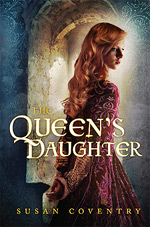
I'm offering a Medieval Historical Mini-Prize Package, including three novels to go to one winner.


The first is: Illuminations. A Novel of Hildegard von Bingen by Mary Sharratt.

Link to my review here.

The second is The King's Mistress by Emma Campion.

Link to my review here.

And my book is: The Queen's Daughter.


To enter (Sorry but for readers in the US only this time around): Leave a name and email address in the comment section. You don't have to be a Reading World follower, but if you are a follower (GFC or email subscriber) you'll get one extra entry. Please make a note in the comment if you are a follower so I'll know to count your extra entry.


Thursday, December 6, 2012

ESCAPE TO THE PAST WITH: The Passing Bells by Phillip Rock

Here’s something I really enjoy: good old-fashioned, multi-POV, epic historical fiction. It’s what I cut my teeth on. And even though I don’t read as much of it these days (it seems to have fallen out of fashion somewhat) when I do read one of these novels, I’m hooked.

I saw mention of The Passing Bells by Phillip Rock at Historical Tapestries, actually a guest post by The Savvy Reader, that talked about favorite WWI books. The Savvy Reader recommended the book for Downton Abbey fans. I haven’t seen the show but people have told me I would enjoy it. A book described as Downton Abbey-like sounded like the next best thing. My library had a copy so. . .

The Passing Bells is the story of the Greville family, including Anthony Greville who is the 9th earl of Stanmore, his wife the countess, his two adult sons (Charles and William) and a daughter (Alexandra), friends of the family who are slightly lesser in rank-- Captain Fenton Wood-Lacy and Roger Wood-Lacy, an heiress whom Charles is being pushed to court, Winifred Sutton, and an exceptionally wealthy and gorgeous neighbor/childhood friend, Lydia Foxe. The boys are in love with Lydia, but her father, Archie Foxe is not a gentleman. (He’s a perfectly nice man, it’s just he’s made his money in trade and has anti-aristocratic political views.) There is also an American cousin of the Greville’s– Martin Rilke, who is a journalist come to England intent on a 6 week or so European tour. His plans are disrupted. And then there are numerous servants in the Greville’s household, Abingdon Pryory (misspelling intentional). The most significant of the servants are the chaffeur/mechanic, Jamie Ross, and an upstairs maid, Ivy Thraxton.

The novel introduces us to all these people, letting us know their backgrounds and their desires and what is keeping them from obtaining their desires. The rigid class system appears to be the driving force in each of their lives, whether they are reluctantly accepting of their positions or trying to clamber above their station (or marry below it.) The characters and their dilemmas are well-developed and were interesting enough to keep me reading, but the pace was pretty slow starting out. I had to keep reading because it’s the kind of book that if I put it down for too long, I might not have picked it back up--not at first. And yet, I didn't exactly want to put it down either. I was quietly sucked in.

This book has been around awhile. It’s copyright is 1978. It’s a WWI novel, but here’s the thing. It’s 433 pages long, and it wasn’t until page 108 that a passing reference to the assassination of the Archduke of Austria appeared. The war did not begin until page 150. Before the men rushed off to battle, the author makes certain you are emotionally invested in the characters. And not just in the characters, but in what is happening to the home front. You understand the way of life, warts and all. The amount of time spent on character development is well worth it.

Before the war, men are discussing the Serbia situation with little understanding and less interest. Once the war begins, they fight dutifully and patriotically, but there is little sense, from the novel at least, that winning will accomplish anything but the end of horrific, meaningless slaughter. In the meantime, the way of life that they knew was unraveling behind them.

With the beginning of the war, the pace of the narrative picks up. By then, I was fully committed to the characters and I was quite deeply immersed in the war-time plots. With so many characters to follow, it did have a bit of a soap opera quality, moving from one storyline to another. Yet their lives were intricately intertwined so the overall story flowed well. As the war draws to its close, the book also drew to its devastating end. I didn’t realize just how addicted I was until I found myself requesting Book Two in the Greville saga, Circles of Time from the library. I want to know how they (the ones left) move on after the war.

Friday, November 30, 2012

BOOK BLOGGER HOP- NOV. 30- DEC. 6

Book Blogger Hop

Welcome to the Book Blogger Hop!

Hashtag: #BookBloggerHop


Book Blogger Hop is the creation of Jen from Crazy for Books. Since October, the weekly hop has been hosted by a variety of book bloggers all across the globe and for the next two weeks, the hop is visiting Anglers Rest!


So, without further ado....

Question - Apart from being readers, many of us collect books on a specific subject or by a particular author. What books or which author do you collect?


It's been quite some time since I've participated in the book blogger hop. Somehow, Friday always seems to slip away from me and then I'm thinking about other things. But I keep meaning to get back to hopping. So, my answer:
 
There are a couple of authors whose books I collect, mainly favorite historical fiction writers. Oddly enough, the books I collect most avidly are historical mysteries- even though I don't very often read mysteries. But I am addicted to Margaret Frazer. In particular, I love the Joliffe series, but I read the Dame Frevisse books too (partly because I'm hoping Joliffe will show up.)  I also have been following Lindsey Davis's Falco series for years and years.

I collect other books too. Medieval history is one topic. I'll stop there. My collections get pretty random after that.

If you want to join in the hop, visit Anglers Rest to link up your own post.  Link back YOUR Friday Book Blogger post and then try to visit at least 3 other sites and comment - hops are a great opportunity to meet new bloggers!